
Last updated November 14, 2026
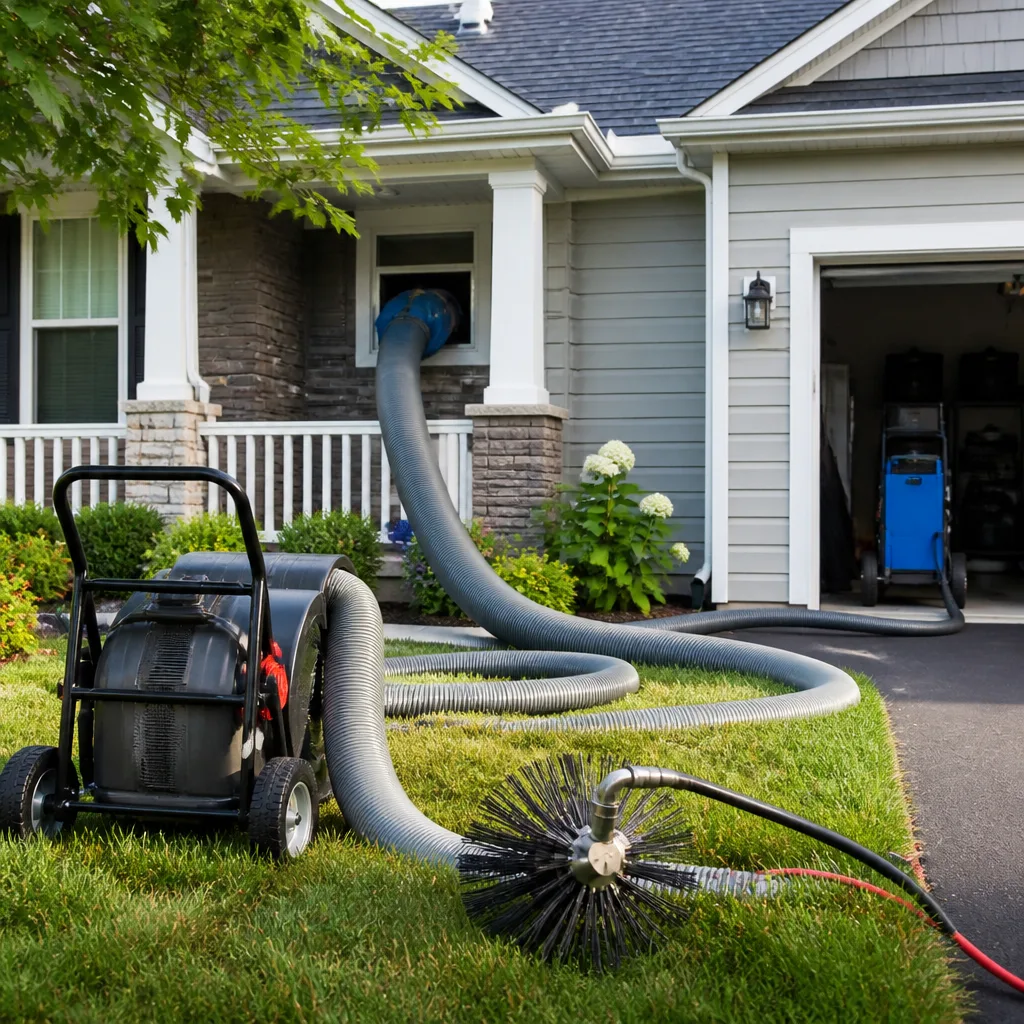 Whole-home duct cleaning
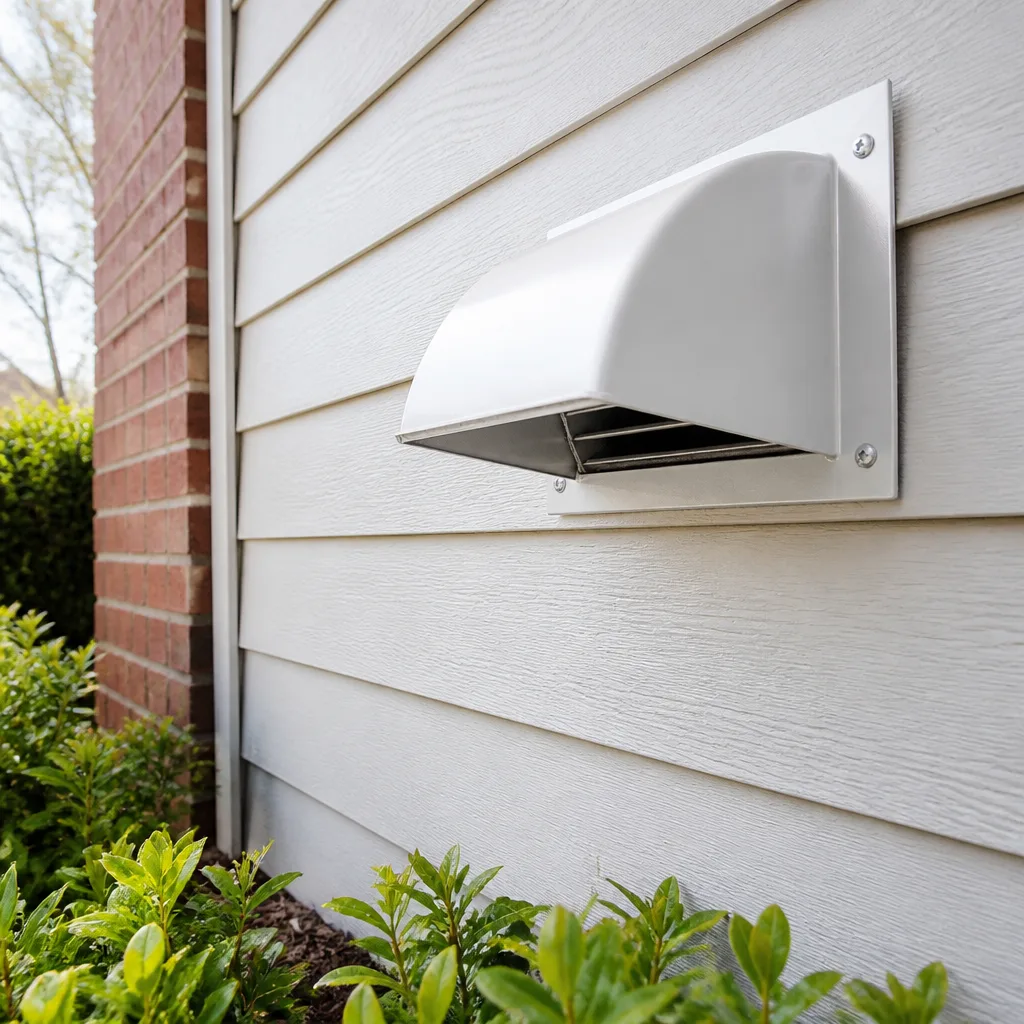 Dryer vent cleaning
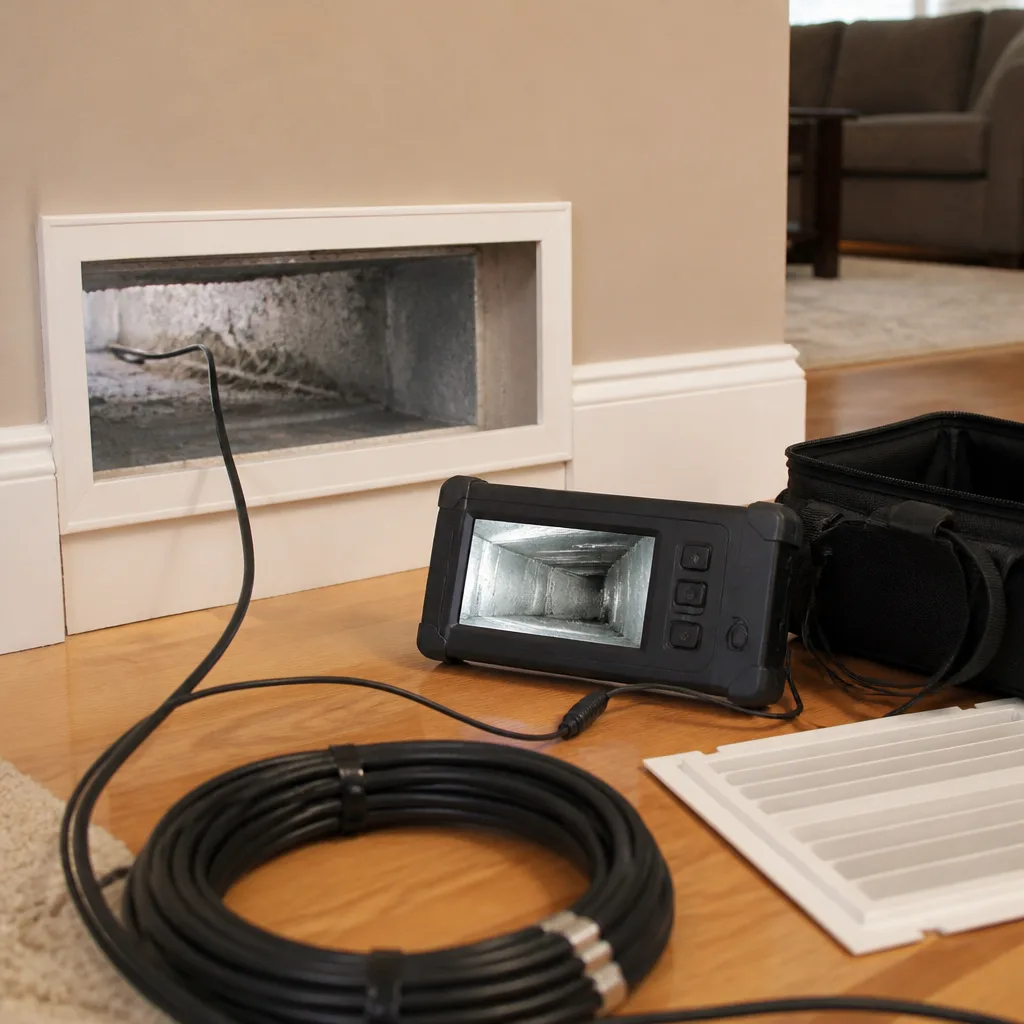 Camera inspection
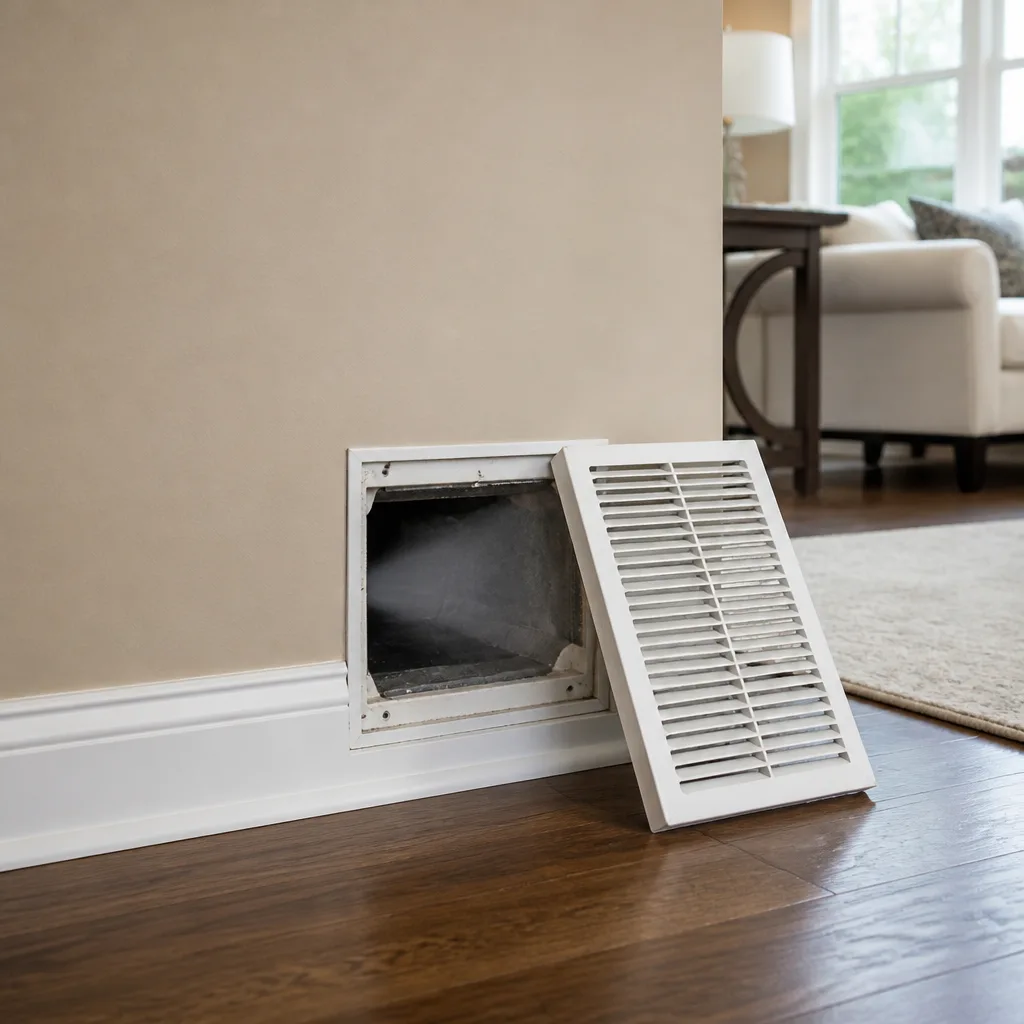 Sanitizing & deodorizing
Whole-system duct and dryer vent check with before-and-after photos - you see exactly what came out of your vents
That "$99 whole-house special" is a bait ad - the real number appears once they are in your hallway, or the "clean" is a shop-vac at the register. We photograph the inside of your ducts before and after instead.
DIY vs Professional Air Duct Cleaning: The Pompano Beach Homeowner’s Decision Guide
Most people who look into duct cleaning assume the question is about money or skill. It isn’t. It’s about reach. A consumer dryer vent brush kit reaches maybe 12 inches into a supply run before it hits a bend, while the contamination that actually degrades your indoor air is sitting in the main trunk line 15 feet from your grille. That gap in reach, not effort or budget, is what separates a homeowner with a vacuum from a professional system. In this guide we’ll walk through exactly what each approach can physically touch, what you can reasonably do yourself, why Pompano Beach homes with attic-mounted flex duct are especially poor candidates for DIY cleaning, and how to judge which side of the line your own house falls on.
Quick Answer
You can handle grille removal, filter changes, and visual inspection on your own. You cannot effectively clean the inside of your duct system with consumer tools, because a shop vac and a brush attachment can’t reach the trunk line, navigate bends, or agitate stuck debris the way a rotary brush system does. In Pompano Beach’s flex-duct construction, the risk of DIY goes further: improper brushing can dislodge interior insulation and make your particle problem worse than it was before you started.
Styles & brands we work with
- Whole-home duct cleaning
- Dryer vent cleaning
- Camera inspection
- Sanitizing & deodorizing
Table of Contents
- What Professional Equipment Can Reach That You Can’t
- The Access Problem in Pompano Beach Duct Systems
- What Homeowners Can Effectively Do Themselves
- Why DIY Attempts Usually Fail (and Sometimes Backfire)
- Flex Duct, Attic Heat, and Why Local Homes Are Poor DIY Candidates
- How to Evaluate Your Own System Before You Decide
- Dryer Vents: The One Job You Should Never Skip
- Common Mistakes to Avoid
- When to Call a Professional
What Professional Equipment Can Reach That You Can’t
A rotary brush system like the Rotobrush feeds a spinning brush head through your ductwork on a flexible shaft. The brush makes contact with the duct walls all the way around as it travels, scouring loose and stuck-on debris into the airstream. A negative-air machine like the Nikro equipment we run then holds the duct under vacuum so that everything the brush liberates gets pulled into a HEPA-filtered collection unit instead of drifting into your living room. Together, those two tools clean a residential system in a way a homeowner simply can’t replicate.
Compare that to what’s available at a hardware store. A shop vac has a hose a few feet long, limited suction over a distance, and no way to spin a brush against the walls of a duct. A hand-cranked vent brush reaches into a straight run and stops at the first elbow. Neither tool creates negative pressure in the system, which means anything you loosen tends to become airborne in the room rather than getting captured.
- Rotary brush on a flexible shaft: reaches through runs, around bends, and scrubs all sides of the duct wall.
- Negative-air machine with HEPA filtration: keeps the whole system under vacuum while work happens, capturing fine particles rather than recirculating them.
- Containment-grade filtration: the same Abatement Technologies standard applied in professional remediation environments, so dust doesn’t escape into the home.
- Access tools: cutting and resealing access points at the trunk and plenum, which is where the real contamination concentrates.
That’s the honest equipment comparison. It isn’t that a homeowner lacks the skill to push a brush. It’s that the brush available to a homeowner doesn’t do what a rotary head does, and there’s no negative-air system behind it to contain what comes loose.
The Access Problem in Pompano Beach Duct Systems
Walk into most Pompano Beach homes built in the last few decades and you’ll find the air handler in the attic, with a spider of flex duct running out to ceiling grilles from a central trunk. That layout is efficient for cooling in our climate and it’s cheap to install. It’s also a poor fit for DIY cleaning, because the trunk line, the plenum at the air handler, and the return path are all sealed or covered and there’s no convenient port to work through.
Cleaning the inside of a system requires access to the full air pathway, not just what you can see through the grille. That means opening and resealing the plenum, working the trunk, and getting into the return. A professional setup creates those access points and closes them properly afterward. A homeowner looking at the supply side sees a grille and a length of duct behind it and stops there.
Grilles themselves are only the visible edge of the system. The debris that matters settles in the horizontal trunk, in the low spots where air moves slowly, and in the return where household dust gets pulled in first. If you’ve ever pulled a grille off and found it gray and linty, remember that’s the small sample. The main line upstream is where the accumulation actually sits, and in a Pompano Beach attic those runs can be 15 to 20 feet from the grille you’re looking at.
There’s also the matter of how the system ages in our climate. Attics here get hot, and flex duct that’s been sitting in an attic for years can sag, kink at the bends, or develop small tears at the joints. Sealant dries out. Vapor barriers fail. That means a real inspection has to check the ducts for damage, not just dirt. Valor Air Duct Cleaning offers air duct cleaning and duct repair as separate services for exactly that reason: dirty ducts and damaged ducts aren’t the same problem, and cleaning around a torn section doesn’t solve anything.
What Homeowners Can Effectively Do Themselves
Some tasks are genuinely within your reach and worth doing on a regular schedule. These are the ones we point homeowners toward rather than trying to talk them into a full cleaning they don’t need yet.
- Remove and wash the grilles. Most supply and return grilles pop off with a screwdriver. Wash them with mild soap and warm water, dry them fully, and put them back. Do this every few months. It’s real, it’s free, and it cuts down on visible dust at the register.
- Change the air filter. This matters more than most people think. A clogged filter strains the blower and reduces airflow. Check it monthly and replace it per the manufacturer’s recommendation, or sooner if you can see a gray mat.
- Do a visual inspection. A flashlight and a phone camera can tell you a lot. Look for visible dust accumulation on the grille and just inside the duct mouth. Look at the exposed flex duct in the attic for kinks, sagging, or obvious tears. Look around the air handler for condensation, rust, or dust on the coil. None of this requires opening the system.
- Keep the return area clear. A blocked return pulls less air, which means the system runs longer and dust settles more. Check that furniture, curtains, or boxes aren’t sitting over the return grille.
- Clean the dryer vent lint trap and the short run behind the dryer. The lint screen is obvious; the short duct between the dryer and the wall vent is worth checking too. Everything past the wall is a different story, covered below.
Those five tasks make a real difference, and we’d rather you did them than skipped them. What they don’t do is clean the inside of the trunk line, the return plenum, or the air handler cabinet, because those require access and tooling that consumer products can’t provide.
Why DIY Attempts Usually Fail (and Sometimes Backfire)
The failure isn’t usually about effort. A homeowner with a shop vac and a vent brush has the best intentions. The failure is structural: the equipment can’t reach the contamination, and the process can actually make things worse.
- Consumer tools can’t reach the trunk line. A vent brush stops at the first bend. Shop vac hoses are short and lose suction over any real distance. What’s left is the 12 inches just inside the grille, while the trunk 15 feet upstream stays as dirty as it was.
- Aggitating without containment spreads dust. If you brush the inside of a duct without a negative-air machine pulling from the other end, you’re loosening debris into the airstream and letting it settle back into the system, the furnace, and your living room. You’ve relocated the problem, not removed it.
- Improper brush use damages flex duct. This is the one that catches people. Flex duct has an inner liner of foil or plastic film, often with a wire helix carrying insulation around it. A consumer brush pressed against that liner can tear it, dislodge insulation, or pull the liner away from the wire support. Now you have fiberglass fragments or foil shreds in the airstream, which is a worse particle problem than the dust you started with.
- Resealing is easy to get wrong. Any access you cut has to be closed again with duct-appropriate sealant and tape. A poor seal lets attic air and insulation particles into the system, which is a direct hit to your indoor air quality.
- The wrong tool on the wrong surface. A stiff brush on a foil-lined flex duct is not the same as a rotary head on a rigid trunk. Professional cleaning calls for matching the tool to the material, and a homeowner with one brush has one option.
That fifth point is worth restating. Professional-grade equipment, not a shop vac with a logo on it, is the baseline. A Rotobrush rotary head on a flexible shaft is designed to scrub without destroying the liner, and the Nikro vacuum behind it pulls from the other end so the debris leaves. Without both, the attempt is incomplete at best and damaging at worst.
Flex Duct, Attic Heat, and Why Local Homes Are Poor DIY Candidates
Pompano Beach homes lean heavily on flex duct for a simple reason: it’s fast and it works well enough in a climate where the system runs a lot. But flex duct introduces three problems for anyone thinking about cleaning it themselves.
First, the material is fragile. Flex duct has a thin inner liner, a wire helix, and insulation wrapped around it. A brush jammed into a bend can tear that liner, and a torn liner means insulation particles in your supply air. This is why the answer to “can I just run a brush down there” is usually no. The brush needs to be sized and driven by someone who can feel what the duct is doing on the other end.
Second, the access is in the attic. Working up there in South Florida summer heat is a real safety matter. Attic temperatures are dangerous, the surface is unprotected, and there’s limited room to move around ductwork without stepping on it or disconnecting a joint. That’s not a reason to avoid hiring a professional because it’s “too hard,” it’s a reason the job gets done properly by someone equipped for it.
Third, flex duct is a poor fit for a spinning brush. A rotary head designed for rigid duct can be adapted for flex, but only by a technician who knows how to modulate speed and pressure. A homeowner running a brush on a drill through a flex run is the single most common way we see duct liner damage.
Put all three together and the case for DIY in Pompano Beach gets thin fast, especially in older homes where the ductwork has had years of heat cycles and might already have small tears at the joints. In that situation, cleaning is only half the job. Duct repair is the other half, and it has to happen first. We see this often enough in Pompano Beach that we treat air duct cleaning and duct repair as two separate services rather than bundling them.
How to Evaluate Your Own System Before You Decide
Not every home needs professional cleaning right now, and a good company should tell you that. Before you decide, work through these factors. The more that apply, the stronger the case for bringing in a professional.
- Age of the ductwork. A system installed in the last five years with regular filter changes may not need cleaning yet. A system that’s been in place through multiple owners and remodels probably does.
- Recent renovation or construction. Drywall dust, sawdust, and construction debris get pulled into the return and settle in the trunk. If your home has had work done in the last year or two, that debris is in the system.
- Visible dust at the registers. Pull a grille and look just inside. A light film is one thing. A thick gray mat suggests the whole system has it.
- Allergy or respiratory complaints. If people in the house are noticing symptoms that ease when they’re away, the indoor air is worth investigating, and a duct cleaning is a reasonable next step.
- New HVAC install. A new air handler installed onto dirty ductwork is not doing what it was bought to do. Clean the system before or at the install, not after.
- The dryer story. If the dryer takes longer to dry a load than it used to, or the outside vent flap barely lifts, the dryer vent is the first problem to solve.
- Duct integrity. If you see kinks, tears, disconnected sections, or sagging runs in the attic, that’s a repair issue before a cleaning issue.
The honest answer for some Pompano Beach homes is “not yet.” If you’ve got a young system, you change the filter regularly, no one is sneezing, and there’s no visible dust, we’ll tell you. If the system fails two or three of the points above, cleaning is the right move and DIY won’t get you there. That’s the criteria we use when we look at a system, and it’s the same criteria you can apply before you call anyone.
Dryer Vents: The One Job You Should Never Skip
Dryer vent cleaning is the part of this conversation where the stakes shift from comfort to safety. Lint is highly combustible, and it accumulates in the vent run past the wall and near the outside termination where the flap opens. When that run gets blocked, the dryer works harder, takes longer, and the risk of a fire increases. This is a life-safety issue, not a “nice to have.”
What you can do safely on your own is limited to the lint trap and the short, usually flexible duct behind the dryer. That section you can pull off, inspect, and replace with the correct type if it’s crushed. Everything past the wall, including the long horizontal run and the outside termination, needs a professional with the right brushes and a vacuum that can capture what comes out.
Here’s the part that surprises people: the same physical constraints you just read about apply to dryer vents too. A consumer dryer vent brush kit reaches roughly a dozen inches before it hits a bend, and it can’t push the lint out the termination. A proper vent cleaning runs a brush from the inside or outside of the full length of the duct, captures the loosened lint with a vacuum, and clears the outside flap. That’s why Valor Air Duct Cleaning runs dryer vent cleaning as a separate service from duct cleaning. Two different jobs, two different tools, and both belong in the same slot on your calendar.
If your dryer is taking longer to cycle than it used to, that’s the signal. Not a nuisance, an indicator. Have it cleared before it gets worse.
Should You Clean Air Ducts Yourself in Pompano Beach?
For most Pompano Beach homes, no. The honest reason isn’t that homeowners aren’t capable – it’s that the equipment available at retail can’t reach the trunk line, can’t contain what it loosens, and can’t safely navigate flex duct. If the question is whether the visible part of the system needs a wipe down, yes, you can do that today. If the question is whether the inside of the system needs cleaning, the answer is a professional job for physical reasons no amount of effort overcomes.
There’s also the matter of verification. A real cleaning produces evidence: before-and-after photos of the ducts themselves, showing what was in the system and what came out. A shop vac setup in the driveway can’t show you that, because the work didn’t reach the places where the evidence would be. When you hire a company, ask for photos. It’s the single best way to know the work was actually done.
What Does Professional Air Duct Cleaning Include?
A complete professional job covers the full air pathway: supply ducts, return ducts, the plenum, and the air handler cabinet. The tools are what make it complete. A Rotobrush rotary brush system drives a spinning head through the runs while a negative-air machine (we run Nikro equipment) keeps the whole system under vacuum so loosened debris is captured, not recirculated. A HEPA filtration stage keeps fine particles out of your living space during the work.
- Supply and return ducts cleaned end to end, including the trunk
- Air handler cabinet and accessible coil surface inspected and cleaned
- Access points cut and resealed properly afterward
- Grilles removed, washed, and reinstalled
- Before-and-after photos of your own ducts, so you can see the result
- Duct integrity inspected, so any tears, kinks, or disconnected joints get flagged
What it does not include, and shouldn’t, is a per-vent price. If you call a company and they ask how many vents you have before they can tell you what it costs, they’re quoting a number they intend to change. Whole-system pricing is the only honest way to price this job. The price is set per job by the written estimate, and the written estimate sets the final price, not the guy in the van.
See the difference
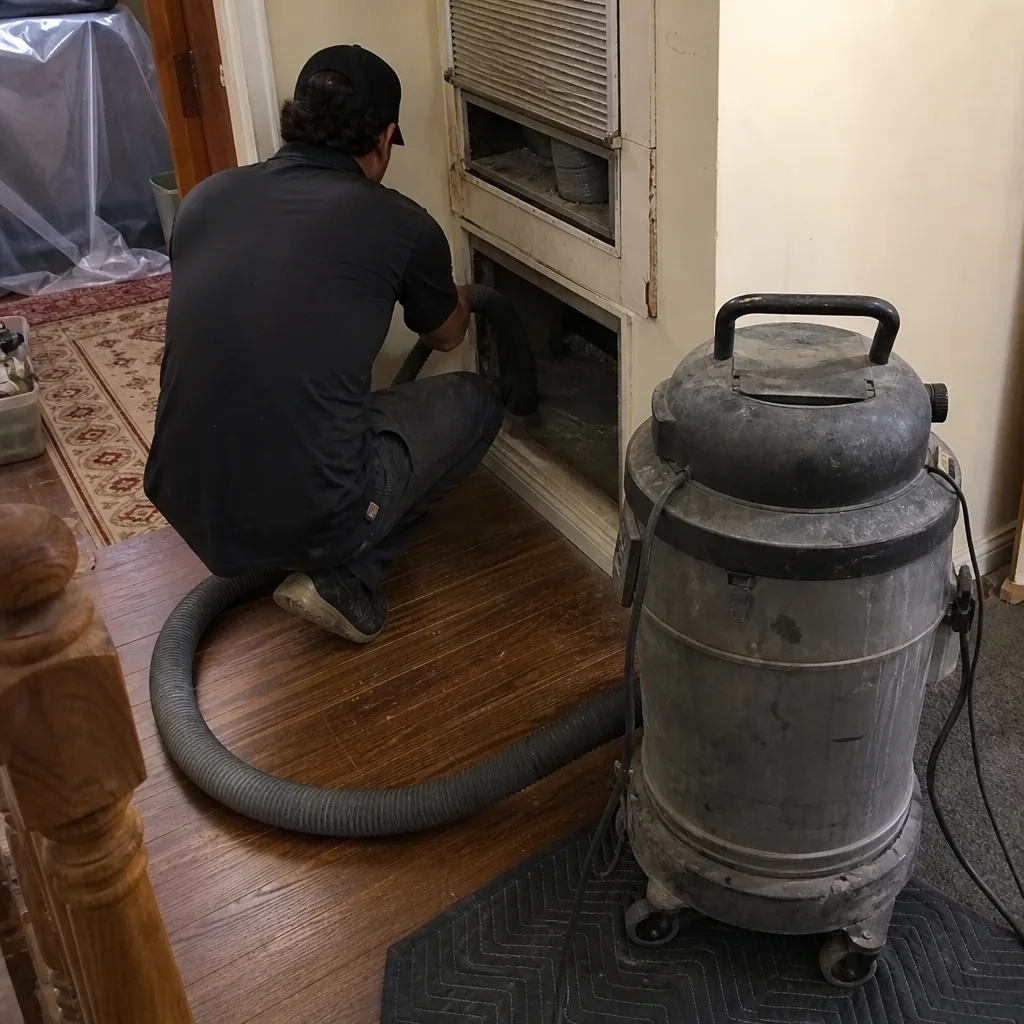 Before
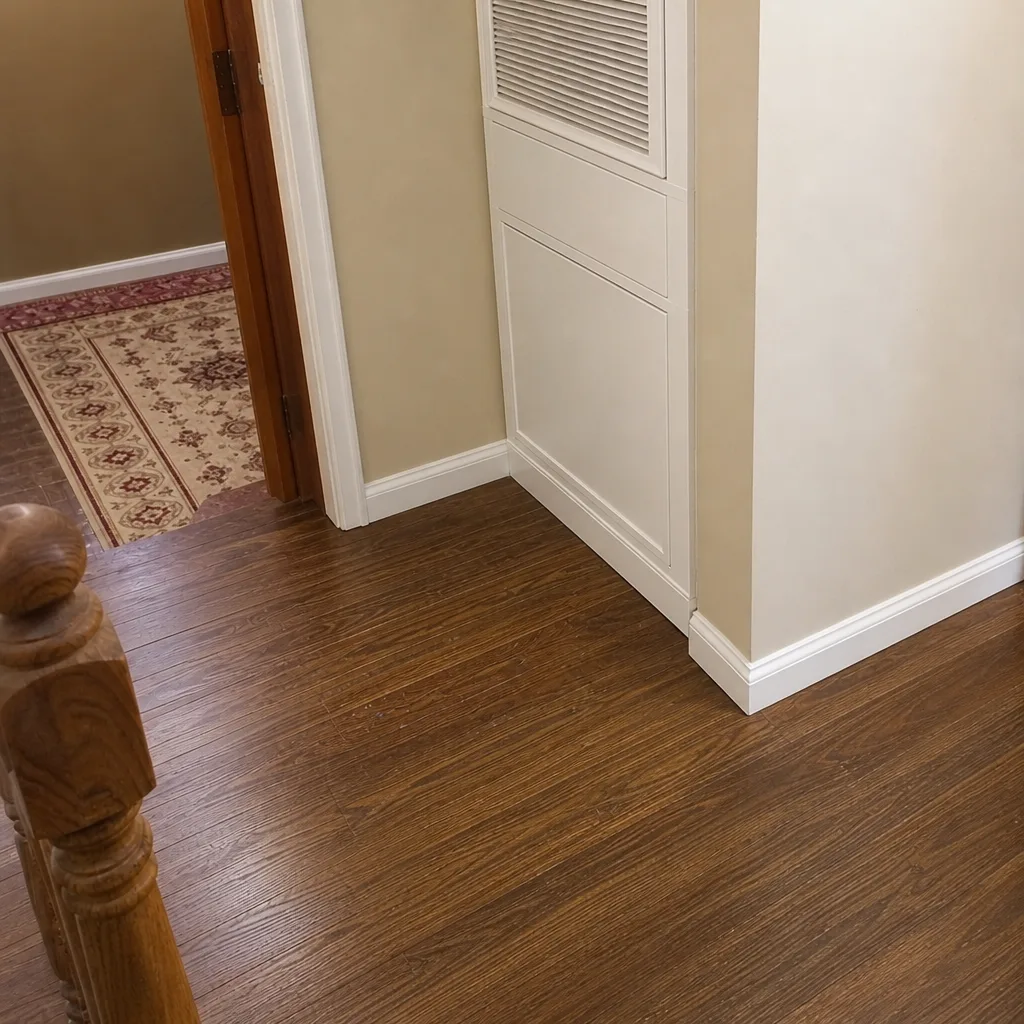 After
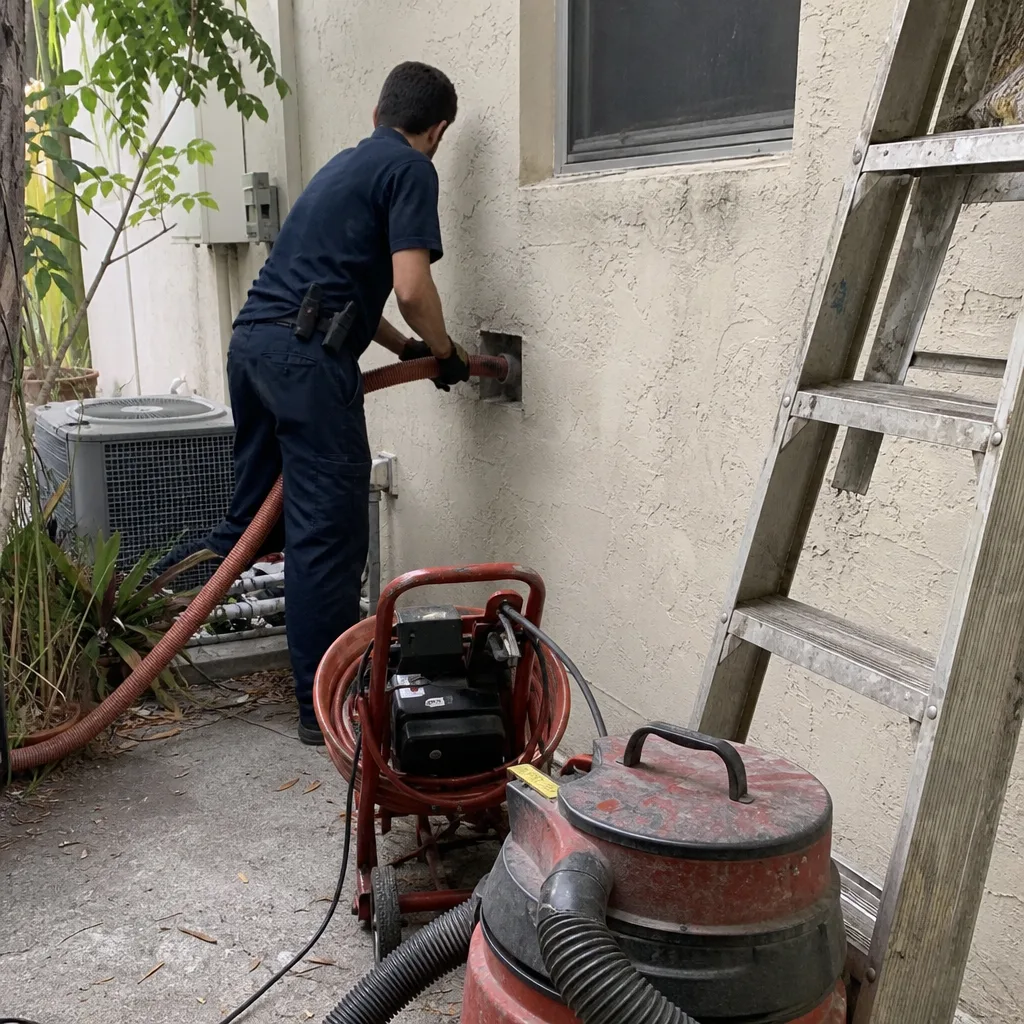 Before
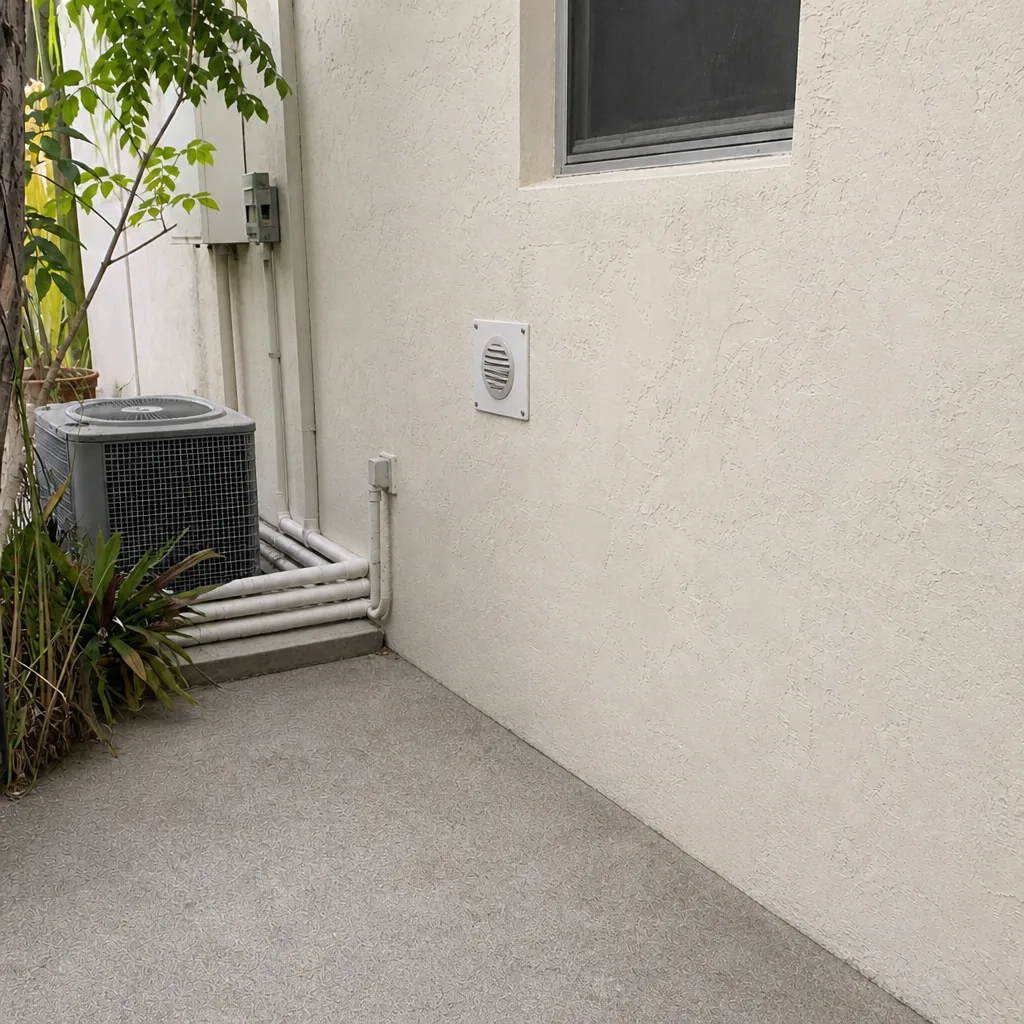 After
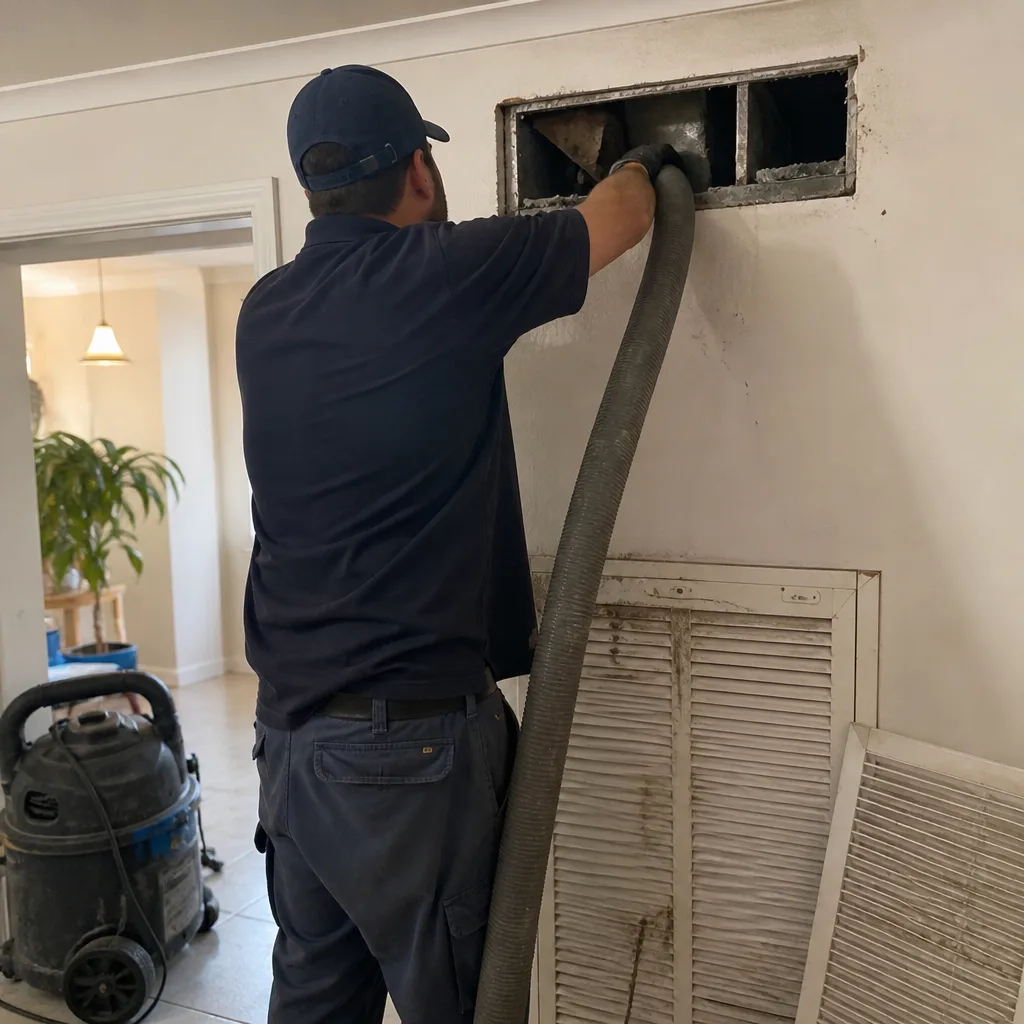 Before
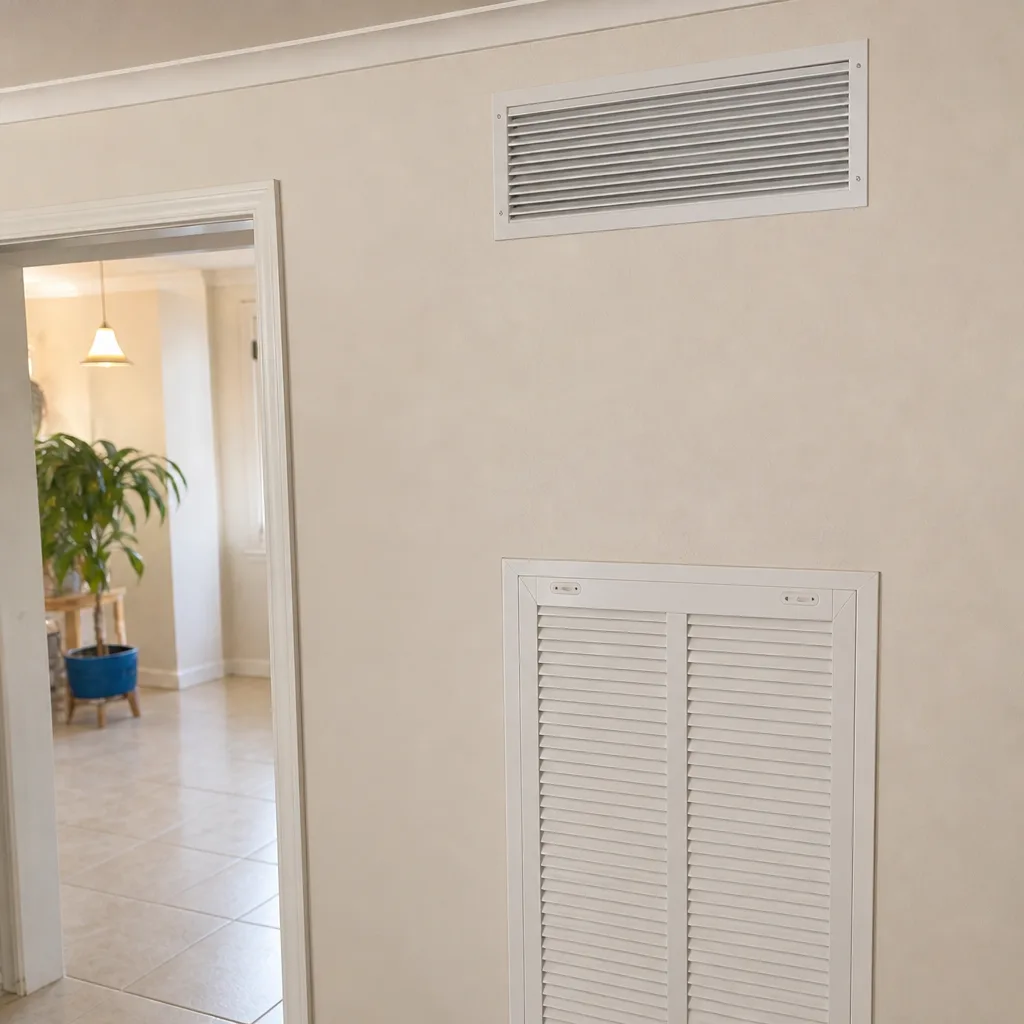 After
Does DIY Duct Cleaning Actually Make Air Quality Worse?
Sometimes, yes. The mechanism is straightforward. Improve hygiene by dislodging contamination without holding the system under negative pressure, and the fine particles you’ve loosened go into the airstream. Some of them get pulled through the filter. Some get pulled into the blower, the coil, and the living room. The system is now dirtier in places you can’t see and cleaner in the places you can.
The other path to worse outcomes is physical damage. A stiff consumer brush on a flex duct inner liner can tear the liner or loosen the surrounding insulation. Now the system is delivering foil shreds or fiberglass fibers into the supply airstream, which is a particle problem that no filter below the coil is going to solve. We’ve seen this outcome enough times to be firm about it: the risk isn’t theoretical, and the fix is expensive. If you suspect a duct has already been damaged, that’s a repair, not a cleaning. Valor Air Duct Cleaning offers air duct cleaning to clear the system and duct repair to fix the cause, and we’ll tell you which you need.
How Much Does Air Duct Cleaning Cost in Pompano Beach?
Pricing for a residential whole-system cleaning in the Pompano Beach market typically falls in the high three figures to low four figures, depending on the size of the home, the number of systems, and whether ducts need repair. The exact number is set per job by a written estimate after someone looks at your actual system.
What you should not accept is a phone quote built on how many vents you have. Per-vent pricing rewards a company for under-delivering: they quote a low number for what sounds like a small job, then find reasons the price goes up once the van is on the drive. That’s the industry’s bait-and-switch reputation, and it’s earned. The alternative is straightforward. We give you one flat price per system, agreed before any work starts. No per-vent pricing, no coupon price that doubles on arrival.
If a quote comes in far below everything else you’ve gotten, that’s information. Ask what tools will be used, what the work actually covers, and whether you’ll see photos when it’s done. If the answers are vague or “state-of-the-art equipment” without naming anything, the price reflects the vacuum. Professional-grade equipment like Rotobrush and Nikro, plus the Abatement Technologies filtration, costs a company real money. That’s part of what shows up in a real estimate.
When comparing quotes, use this checklist:
- One flat price for the whole system, not a per-vent rate
- Tools named (Rotobrush rotary brush, Nikro negative-air, Abatement Technologies filtration)
- Supply and return both included, plus the air handler cabinet
- Before-and-after photos of your own ducts
- Duct integrity inspected and any damage reported
- Access resealed after the job
For a free estimate on your Pompano Beach home, call (844) 795-4871. We answer 24/7. Fast dispatch from 7am to 7pm, Sunday through Friday.
Common Mistakes to Avoid
- Renting or buying a shop vac and calling it cleaning. A shop vac has no rotary brush, no negative-air containment, and no way to reach the trunk line. It can vacuum the grille area; it can’t clean the system. This is the most common mistake we see and the most expensive one in the long run, because the real contamination stays in place and gets worse over another season.
- Running a stiff brush into flex duct. In Pompano Beach’s attic flex systems, a brush on a drill can tear the inner liner and dislodge insulation. The damage is usually invisible from the grille and shows up as a particle problem weeks later. If you’re not sure what kind of duct you have, stop and have a professional look before you push anything into it.
- Assuming “we need it” without checking the system first. A well-maintained system with clean filters and no visible dust doesn’t need cleaning just because the calendar says so. Use the criteria in this guide. Spending on a service you don’t need is a mistake too.
- Choosing the lowest quote. A low per-vent price is usually a loss leader that changes once work starts, or a reflection of what tools the company brought. Ask what equipment the crew uses before you price shop.
- Neglecting the dryer vent. Lint accumulation in the vent run is a fire risk, not an annoyance. It’s the one job on this list where “I’ll get to it” is genuinely unsafe.
- Cleaning dirty ducts without checking for damage. If the ductwork has tears, kinks, or disconnected joints, cleaning first and repairing later wastes the cleaning. Look at duct integrity first, then decide the order of work.
- Skipping the air filter. Dirty filters strain the blower and reduce airflow, which accelerates dust settling in the system. It’s the cheapest thing on this page and the easiest to forget.
When to Call a Professional
Call a professional when the problem is inside the system, past the grille. That means visible dust accumulation in the trunk, recent renovation with construction debris, a new HVAC install onto existing ducts, allergy symptoms that ease away from the house, and any sign of damage to the ductwork. Call when a dryer is taking longer to dry or the vent flap barely opens. Call when you remove a grille and see a thick mat of lint rather than a light film.
What you don’t need to call for is a grille wipe down or a filter change. Do those yourself; they matter and they’re inexpensive.
Valor Air Duct Cleaning offers free estimates in Pompano Beach – call (844) 795-4871. We answer 24/7. Fast dispatch from 7am to 7pm, Sunday through Friday. We run Rotobrush rotary systems and Nikro negative-air equipment, stock and service Honeywell and Aprilaire air quality components, and treat duct repair as a standalone service, because cleanup that ignores structural damage doesn’t solve the problem.
Frequently Asked Questions
No. A shop vac can reach a few inches into a duct through a grille, which is useful for surface cleaning but does not clean the system. It can’t spin a brush against the duct walls, can’t create negative pressure to contain what it loosens, and can’t reach the trunk line where most contamination sits. In flex-duct attics common to Pompano Beach homes, forcing a shop vac hose into a bend risks tearing the inner liner. Call (844) 795-4871 for a real estimate on a whole-system cleaning.
It depends on the house more than the calendar. A system that’s clean, with filters changed regularly and no visible dust or allergies, doesn’t need it on a schedule. Homes with recent renovation, a new HVAC install, pets, visible dust accumulation at the registers, or persistent allergy complaints should be evaluated. If it’s been many years since the ducts were cleaned and none of that applies, a visual inspection first is the honest step, not an automatic cleaning. Call for an estimate and we’ll tell you what we see.
Three reasons. Some quote per-vent and plan to raise the price once they arrive. Some use consumer-grade vacuums instead of rotary brush systems and negative-air equipment, so the “cleaning” never reaches the trunk line. And some skip the return side or the air handler entirely. A low price is information about what’s being delivered. Ask what tools will be used, whether supply and return are both included, and whether you’ll get before-and-after photos. For a whole-system price you can plan around, call (844) 795-4871.
Ask for before-and-after photos of your own ducts, taken during the job. A company using real equipment can show you what was in the system and what came out. You should also be able to see the access points cut and resealed, and to look inside a supply duct after the job and see a clean surface. If a crew won’t take you to a duct and show you, or won’t provide photos, that’s your answer. Call (844) 795-4871 and ask for the photo documentation.
It can. Flex duct has an inner liner that a stiff brush or a pushed-in vacuum hose can tear, and the insulation around it can be dislodged into the airstream. Once that happens, you’re pulling fibers or foil into your supply air, which is a worse outcome than the dust you started with. In most Pompano Beach homes, the ducts run in the attic, so damage is out of sight and out of mind. If you suspect the liner has been compromised, that’s a duct repair question. Call (844) 795-4871.
Yes, if the ducts are already dirty. A new air handler installed onto contaminated ductwork is running against the problem it was supposed to solve. Cleaning at or near install time is the right window. If the ducts were cleaned recently, filters are changed, and nothing’s changed in the house, it’s not needed. Also check whether the install company did a duct inspection; if the ducts are damaged or poorly sealed, duct repair matters more than a second cleaning. Call (844) 795-4871 for an estimate.
The Bottom Line
The DIY vs professional question isn’t about effort. It’s about reach, containment, and whether your duct material can survive the process. Consumer tools stop at the first bend; a rotary brush on a negative-air system cleans the whole run and captures what comes out. In Pompano Beach’s flex-duct attics, the risk of DIY goes up because improper brushing can tear the liner and send insulation into the supply airstream. You can handle the grilles, the filters, the inspection, and the lint trap. Leave the inside of the system to equipment that can reach it. If you’re not sure which side of the line you’re on, that’s what the estimate is for.
If you’re weighing your options on a Pompano Beach home, start here. Valor Air Duct Cleaning provides air duct cleaning, dryer vent cleaning, and duct repair across the Pompano Beach area. Call (844) 795-4871 for a free estimate. We answer 24/7. Fast dispatch from 7am to 7pm, Sunday through Friday.
Written by the team at Valor Air Duct Cleaning, serving Pompano Beach since 2018.