
Last updated November 14, 2026
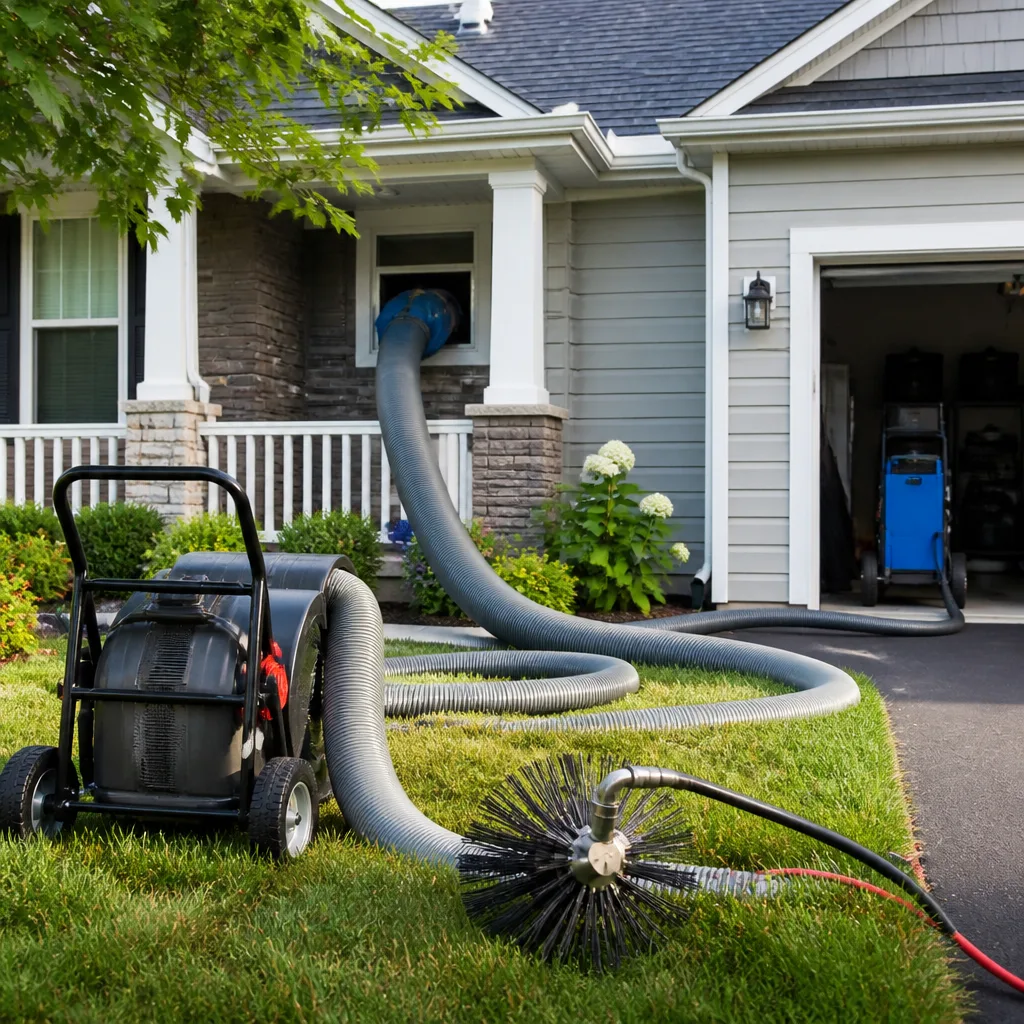 Whole-home duct cleaning
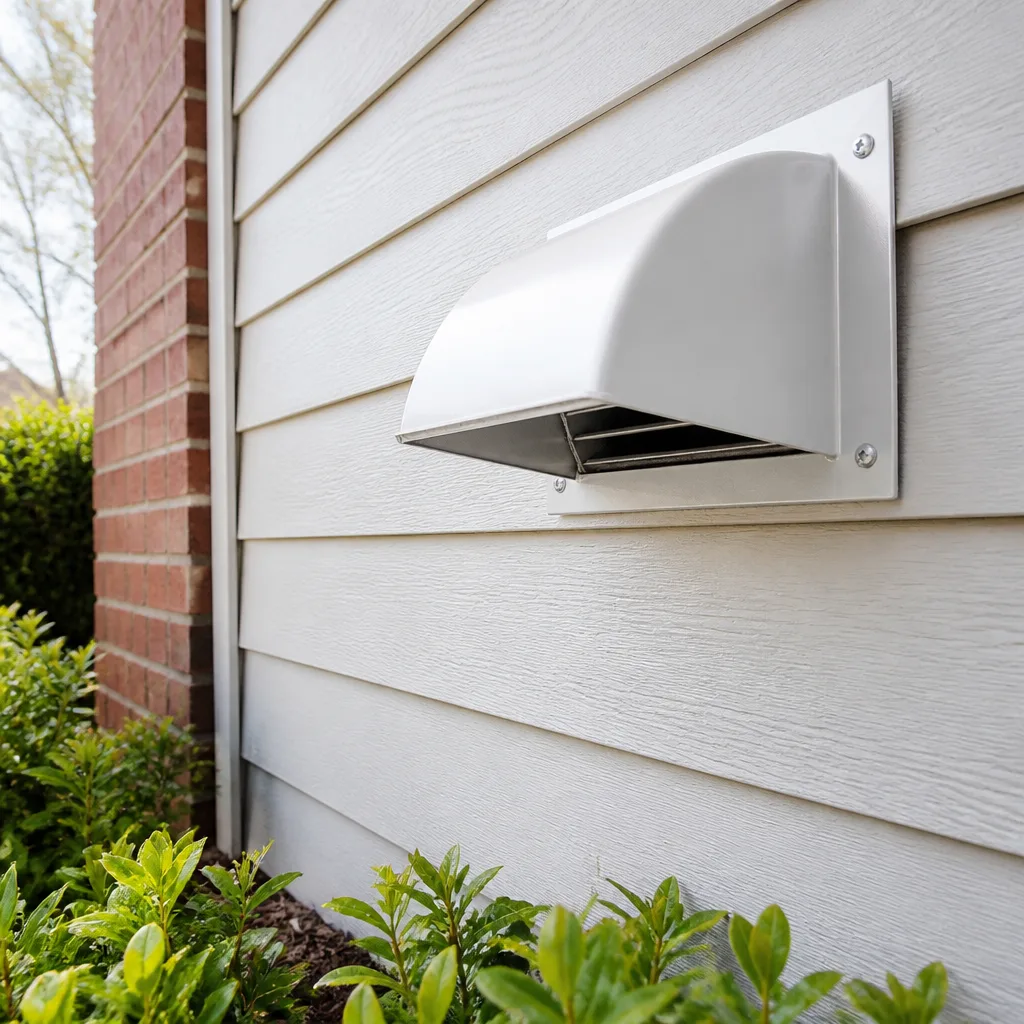 Dryer vent cleaning
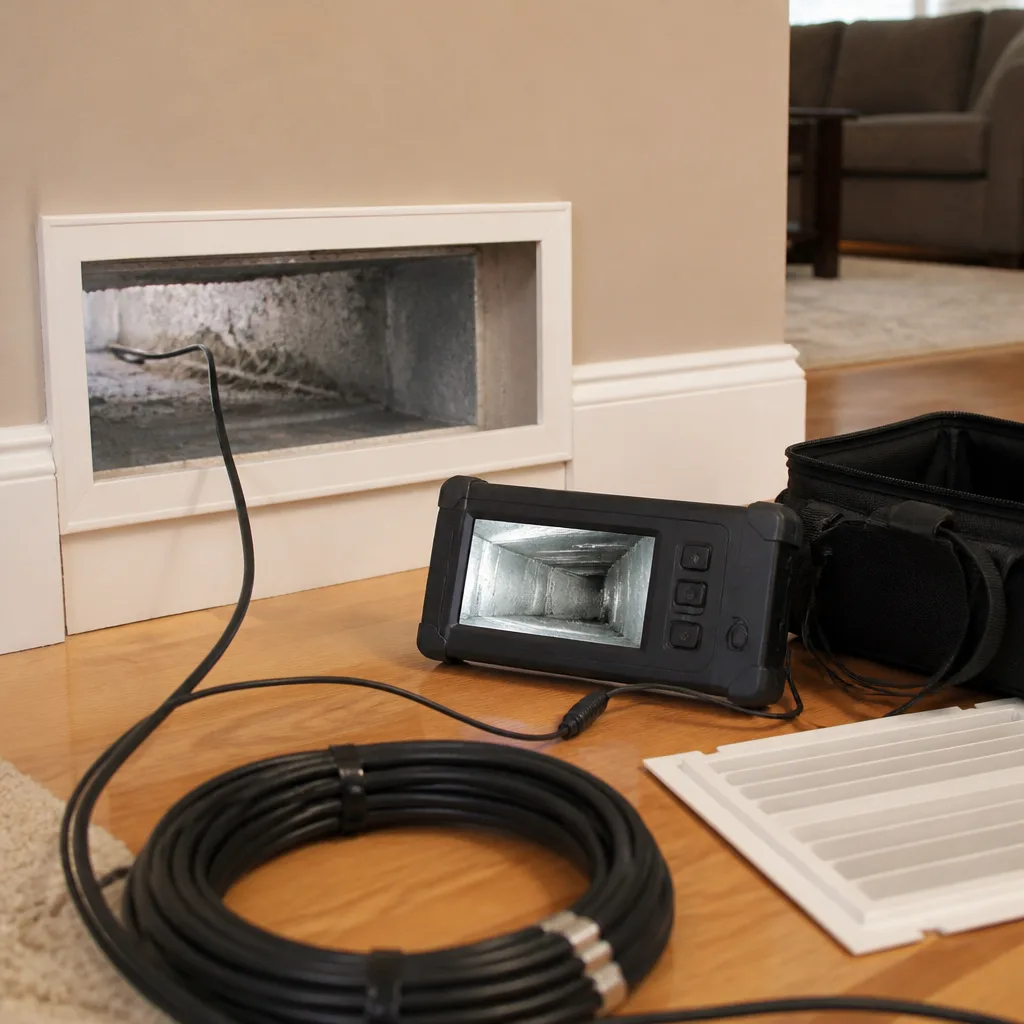 Camera inspection
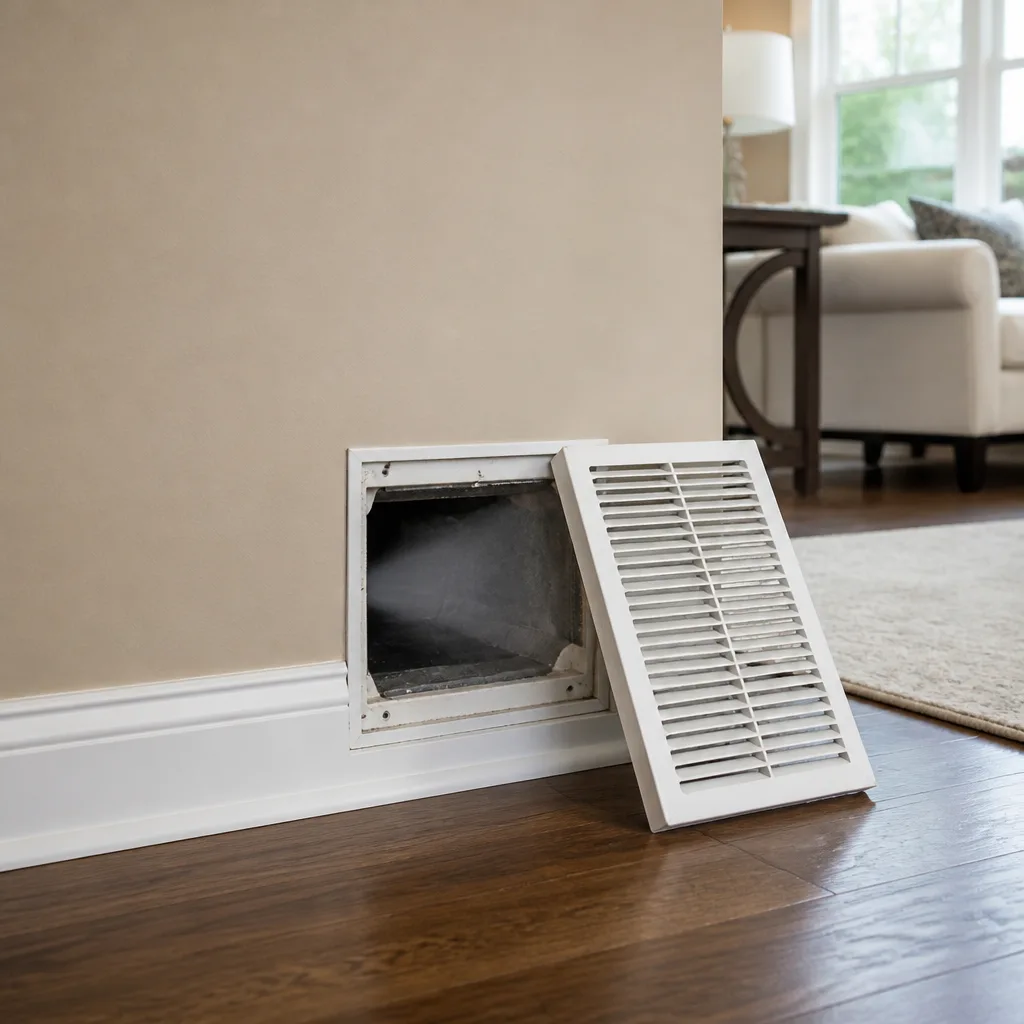 Sanitizing & deodorizing
Whole-system duct and dryer vent check with before-and-after photos - you see exactly what came out of your vents
That "$99 whole-house special" is a bait ad - the real number appears once they are in your hallway, or the "clean" is a shop-vac at the register. We photograph the inside of your ducts before and after instead.
Air Duct Cleaning Emergency Preparedness Guide for Pompano Beach Homes
Most storm preparation advice stops at the visible parts of a house: shutters, generator fuel, water jugs, a cleared lanai. Ductwork rarely makes the list, and that’s the mistake this guide corrects. During a tropical event, the air handler and the ducts connected to it can take on moisture from directions you’d never expect – a lifted soffit, a compromised roof boot, even heavy wind-driven rain finding a gap in the return chase. The damage doesn’t announce itself. A system can look dry from the grille and still be holding damp fiberglass liner insulation in a flex run. Our goal here is to walk Pompano Beach homeowners through what to do with their ductwork before, during, and after a storm, and how to judge whether a cleaning is enough or something more serious is already underway.
Quick Answer
Before a storm, seal your duct access points and shut off your air handler rather than running the AC through wind-driven debris. After power returns, don’t restart the system until you’ve checked for moisture at the air handler and at accessible duct runs, because mold can begin colonizing damp duct surfaces within 48 to 72 hours. If the ducts held water or look visibly wet, call a professional for inspection and cleaning before you run the system, not after.
Styles & brands we work with
- Whole-home duct cleaning
- Dryer vent cleaning
- Camera inspection
- Sanitizing & deodorizing
Table of Contents
- Pre-Storm Preparation for Your Duct System
- What to Do With the Air Handler During the Storm
- The 48 to 72 Hour Post-Storm Window
- Visible Versus Hidden Water Intrusion
- When Cleaning Crosses Into Mold Remediation
- Documenting Duct Condition for Insurance Claims
- When to Call a Professional After a Storm
- Ongoing Duct Readiness for Pompano Beach Homes
Pre-Storm Preparation for Your Duct System
Pre-storm prep for your ductwork comes down to three things: keeping water out of the air pathway, keeping debris out of it, and making sure your air handler doesn’t run at the worst possible moment. Homeowners in Pompano Beach deal with the same pattern as anyone in South Florida – the storm itself is one phase, and the damp, humid recovery is the phase that causes long-term problems. If you handle the first phase properly, you’re in a much better position when power comes back.
The steps below are what a residential property manager or homeowner can reasonably do without opening anything up or getting on the roof. Anything beyond them belongs to a licensed tradesperson.
- Walk the exterior walls and note any gap or crack near a duct grille or air handler closet. Wind-driven rain finds small openings fast. If you see daylight or a clear path for water where the return chase meets the exterior wall, that’s the first place to address.
- Photograph your duct system before the storm. Interior grilles, the air handler closet, the exterior vent hoods, and any flex return in the attic or soffit area. This is the baseline for a claim later, and it’s the single most overlooked step in post-storm duct claims.
- Shut off the air handler if the forecast calls for extended power loss or serious water intrusion. Running a system is fine in normal weather; it’s not fine if you know the house will lose power or if you’ve already seen water entering the structure. An idle system doesn’t distribute contaminants.
- Cover unsealed duct openings. If you have any return or supply that terminates in a workshop, garage, or utility closet with an open end, cover it with plastic and tape before the storm rather than after.
- Clear the outdoor condenser area of loose debris. Not a duct issue directly, but a condenser packed with blown leaves and palm fronds is a compressor problem after the storm, and it complicates ventilation for the whole system.
What we don’t recommend is climbing into the attic during a storm warning or pulling ceiling panels to check a supply run. Those are pre-storm tasks best done on a clear day, or post-storm tasks for a technician with the right equipment. If you’re already working with a professional service like Valor Air Duct Cleaning, a quick pre-storm inspection is a sensible habit, but the emergency guide is about what you can do before a technician arrives.
What to Do With the Air Handler During the Storm
The most important rule during a tropical event is this: don’t let the air handler pull storm-driven air and particulates through the system. Wind-driven debris – dust, insulation fibers, palm debris, fine sand – is exactly what a running air handler will distribute to every room through the supply ducts. In Pompano Beach, the combination of high wind and our typical building stock (block homes with attic air handlers and flex runs) means the return chase is often the entry point for storm air.
When the storm is approaching and you’ve already seen a loss of power prediction or water intrusion:
- Turn the thermostat to OFF, not just down. A system in FAN-ON mode still moves air through the entire duct network. That’s exactly what you don’t want during a storm.
- Don’t open exterior doors unnecessarily. Every open door is another chance for wind-driven moisture to enter the return path.
- Keep the air handler closet door closed but accessible. If water enters the closet, you’ll want to see it fast, but you don’t want storm air pulled through an open closet into the return.
- If the system is running when power goes out mid-storm, leave it off. Don’t flip the breaker back on until you’ve checked for moisture or debris at the air handler.
What we’ve seen repeatedly is homeowners leaving the AC running because “it’s hot” – understandable in July or August, but a system running during a storm is pulling in whatever the storm pushes through the return. That’s the wrong time for airflow. Your comfort on a storm day is secondary to keeping moisture and debris out of the system, and a couple of warm, sticky hours indoors is a much smaller problem than mold colonizing a duct network in the weeks after.
One more thing: don’t cover the outdoor condenser too tightly to “protect” it. Airflow restriction on a covered condenser isn’t ideal once the storm passes and you restart the system. Cover the top only, and remove the cover before restart.
The 48 to 72 Hour Post-Storm Window
The most useful piece of information in this entire guide is this: once water has entered your ductwork, you have roughly 48 to 72 hours before mold can spread through the system. That number isn’t a scare tactic, it’s a working timeline that shapes every decision you make after the storm. A duct system that looks dry from the register can be holding moisture in places you can’t see, and the longer you wait past that window, the more likely the cleaning crosses into remediation.
When power comes back after a storm event, don’t restart the AC immediately. Follow this order:
- Walk the exterior first. Check roof edges, soffit vents, and the wall where your return chase meets the building. Water intrusion at any of those points is the first hint of duct exposure.
- Check the air handler cabinet. Look for standing water inside, condensation on the cabinet exterior, or rust streaks near the bottom seam. Open the filter slot and check the filter – a wet filter means water reached the return.
- Check accessible duct runs. If you can safely reach a flex duct section in the attic or a crawl space, look for sagging insulation or a soft, damp feel. Don’t wrench anything loose; just look.
- Check each supply grille for condensation or a musty smell. A quick sniff near a running grille is not a diagnostic, but a smell like wet paper or a basement tells you moisture is in the system.
- Only then turn the system on. Start with the thermostat set to FAN for a minute, listen for anything unusual, then switch to cool. If the system odors or throws any kind of electrical fault, shut it off and call.
If you’re in Pompano Beach and the storm has visibly damaged the roof or soffit, plan on a professional inspection of the air duct cleaning side of the house before you run the system for any length of time. The cost of an inspection beats the cost of mold remediation every time.
Visible Versus Hidden Water Intrusion
Here’s the part that trips up most homeowners: “It’s dry” is a visual judgment, and duct moisture doesn’t always play by visible rules. Flex duct is the biggest offender. Its outer layer is a vapor barrier – a thin jacket that can look perfectly dry while the fiberglass insulation underneath holds water. A pin drop of moisture trapped in the insulation facing is enough to feed mold growth and degrade the duct’s thermal performance. And the interior of the duct, the actual air pathway, is not something you can see from a grille without a camera.
Places to look beyond the obvious:
- Flex duct runs in the attic. The attic is often the hottest part of the house but also the first place water enters through roof damage. Condensation inside the duct jacket is common here after a storm passes and the attic swings from rain-cooled to sun-baked.
- Return chases behind the wall. Panned joist or wall-cavity returns pick up moisture from wall insulation and can trap it against the duct surfaces out of view.
- The air handler’s condensate path. A storm doesn’t just add rain; it can knock the condensate drain out of alignment, and a backed-up drain pan is a slow water source in the air handler closet.
- Duct boots at the ceiling or floor. Where the metal boot meets the drywall, small gaps can let storm-driven moisture track along the duct surface without any visible wetness at the register.
This is where professional equipment earns its keep. A technician using a Rotobrush rotary brush system with a camera, or a Nikro negative-air setup, can see and pull moisture and contamination that no homeowner can find visually. That’s the practical difference between “looks dry” and “confirmed dry” – and it’s a difference that matters most in the first three days after a storm.
When Cleaning Crosses Into Mold Remediation
There’s a clear line between “this duct system needs a cleaning” and “this duct system needs mold remediation,” and it matters because the two jobs are not interchangeable. Cleaning is routine: brush, agitate, evacuate, verify. Remediation is a containment job: the work area is brought under negative pressure so contaminants don’t escape into the home, materials may be removed and replaced rather than cleaned, and the process is documented for a reason.
Signs that post-storm duct work has crossed that line:
- Visible mold growth on duct interior surfaces, visible through a supply or return opening
- A persistent musty odor that doesn’t clear after several days of normal operation
- Water-damaged flex duct where the insulation facing is torn, wet, or stained
- A known water intrusion event into the return or air handler closet
- Health symptoms in the household that began after the storm and haven’t cleared
Once any of those is in play, the process changes. The equipment matters more: you need contained, negative-air extraction (Nikro systems and Abatement Technologies filtration are what responsible remediation contractors use for this reason) to keep what’s being removed from landing in your living space. The documentation matters more too, because it’s often required by an insurer to support a claim that the moisture source was storm-driven rather than pre-existing.
The pieces of that remediation work a duct cleaning company can handle versus the parts that need a licensed remediation contractor vary by scope. Our view is simple: a duct cleaning company that tells you they’ll handle mold remediation the same as a routine cleaning is telling you they don’t understand the difference. If your ducts show the signs above, ask for a clear scope in writing, ask what containment they use, and if the answer doesn’t line up with a real remediation job, get a second quote.
Documenting Duct Condition for Insurance Claims
Most storm-related duct claims fail on documentation, not on the merits. The homeowner knows the ducts took on water; the insurer wants proof that (a) the moisture came from the storm and (b) the resulting damage is a covered loss. Clean, well-organized photos and a contractor report are what bridge that gap. If you’re a Pompano Beach homeowner who’s just been through a storm, this is the section worth slowing down on.
How to document your duct system properly:
- Photograph everything before cleanup begins. Every grille, the air handler closet, the exterior vent, the attic flex runs you can safely reach. Use flash in dark spaces so the detail is visible.
- Timestamp every photo. Most phone cameras do this automatically, but check your settings. A photo without a timestamp is worth far less in a claim.
- Photograph the water intrusion source, not just the duct damage. A stained ceiling, a lifted soffit, a wet ceiling panel near a supply grille – these connect the storm to the duct damage and tell the story the insurer needs.
- Write down dates and times. When power was lost, when it returned, when you first saw moisture. A short handwritten log is fine and takes two minutes.
- Get a written contractor report. Photos alone don’t prove that duct interior surfaces are wet where you can’t see. A technician report that identifies the affected runs, the type of duct, and the recommended work is exactly what supports a valid claim.
- Keep your before-storm photos. If you followed the pre-storm prep in this guide, you already have them. If not, any pre-storm shot is better than none.
One more piece of advice: don’t throw away damaged flex duct before your insurer has seen it. It’s the strongest physical evidence you have, and once it’s in a dumpster, you’re arguing from photos alone.
When to Call a Professional After a Storm
Call a professional after a storm if any of the following is true: the air handler closet showed standing water, the filter was wet when you checked it, you can smell mustiness near any supply or return, the roof or soffit took damage near a duct run, or the house sat without power for more than a day during a storm and the system is more than a few years old. Those aren’t situations to troubleshoot from a YouTube video or clean with a shop vac.
Professional inspection after a storm event should cover the full air pathway – both supply and return, not just the grilles you can reach. That means looking at the air handler, the return chase, attic flex runs, and duct integrity, because in our experience the damage is almost always in one of those places rather than the visible duct face. Skilled pros use dryer vent cleaning and duct work as one skill set: same equipment, same discipline, and in the case of a dryer vent, the same fire-safety reasoning. A post-storm inspection is also the right time to ask a technician to look at your dryer vent, because high wind and blowing debris clog exterior vent hoods too.
Valor Air Duct Cleaning offers free estimates in Pompano Beach. Call (844) 795-4871. We answer 24/7. Fast dispatch from 7am to 7pm, Sunday through Friday.
Ongoing Duct Readiness for Pompano Beach Homes
Storm readiness is a habit, not a one-time event. The homes that come through a tropical season with clean, dry ducts share a few routines: they know what their duct system looks like on a normal day, they keep a photo record, they clean the system on a reasonable schedule rather than waiting for a symptom, and they call at the first sign of mustiness rather than the third. Those habits are cheap. Mold remediation is not.
A few practical habits that work well in Pompano Beach specifically:
- Schedule a cleaning every few years, and more often if you have pets or a recent renovation. Renovation dust in particular settles into return chases and flex duct runs and doesn’t clear on its own.
- Check the exterior vent hoods once a season. Dryer vent and duct terminations get clogged by palm debris and seed pods. Clear them out before they become a problem.
- Keep a photo log. Even a smartphone folder. Pre-storm photos take 30 seconds and pay off in a claim if one is ever needed.
- Know your brands. If your system has Honeywell or Aprilaire components, find out which ones. It’s information you’ll want if a post-storm inspection turns into a repair.
- Repair before you clean, when there’s damage. A duct system with holes in the attic flex or a separated boot doesn’t stay clean for long. Duct repair is a separate job from cleaning, and treating them as separate problems is what keeps the cleaned system actually clean.
If you’re in a neighborhood like Lighthouse Point, Hillsboro Beach, or anywhere along the Pompano Beach corridor, a pre-season inspection is a reasonable June habit. The point is to know what your system looks like when it’s healthy, so that after a storm you can tell the difference.
Common Mistakes to Avoid
- Running the AC during a storm. The air handler pulls wind-driven debris and moisture through every supply run. Shut it off at the thermostat, not just the breaker.
- Restarting the system immediately after power returns. Wait, then check the air handler and accessible ducts first. Two extra minutes of checking is worth a full season of not dealing with mold.
- Trusting a “dry-looking” duct. Flex duct outer jackets hide moisture trapped in the inner insulation layer. If the storm forced water into the structure, assume the possibility until a technician confirms otherwise.
- Using a shop vac on ductwork after a storm. A shop vac doesn’t contain the contamination it stirs up; it redistributes it. This is exactly the situation where professional negative-air equipment matters most.
- Skipping documentation for an insurance claim. Photos, timestamps, and a contractor report are what turn a “my ducts got wet” story into a supported claim. Take them before the cleanup starts, not after.
- Letting a duct cleaning company do remediation work without asking about containment. Ask what negative-air equipment is used, ask what containment looks like, and get the scope in writing. If the answer is vague, that’s your answer.
- Ignoring the dryer vent after a storm. Exterior vent hoods get clogged by blown debris. A clogged vent is a fire hazard, and it’s easy to miss because it’s not part of the AC system.
See the difference
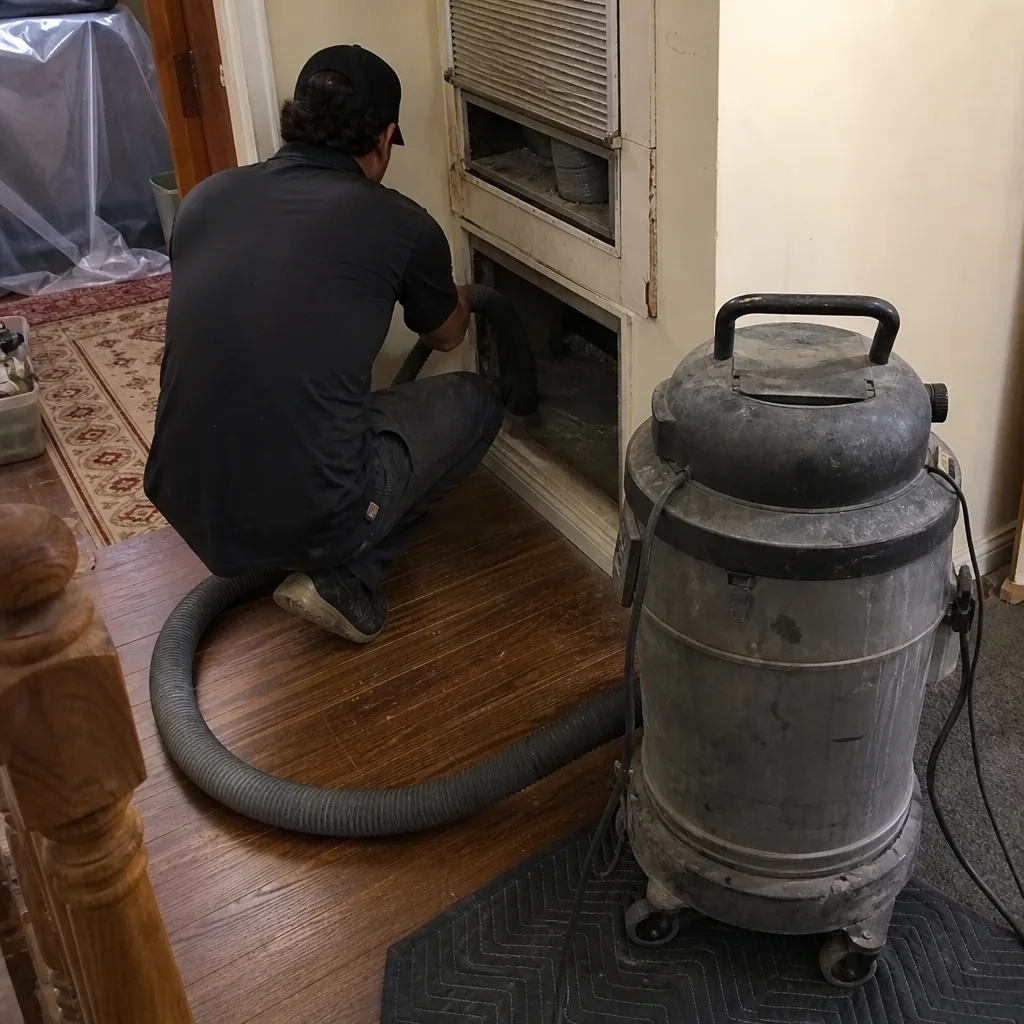 Before
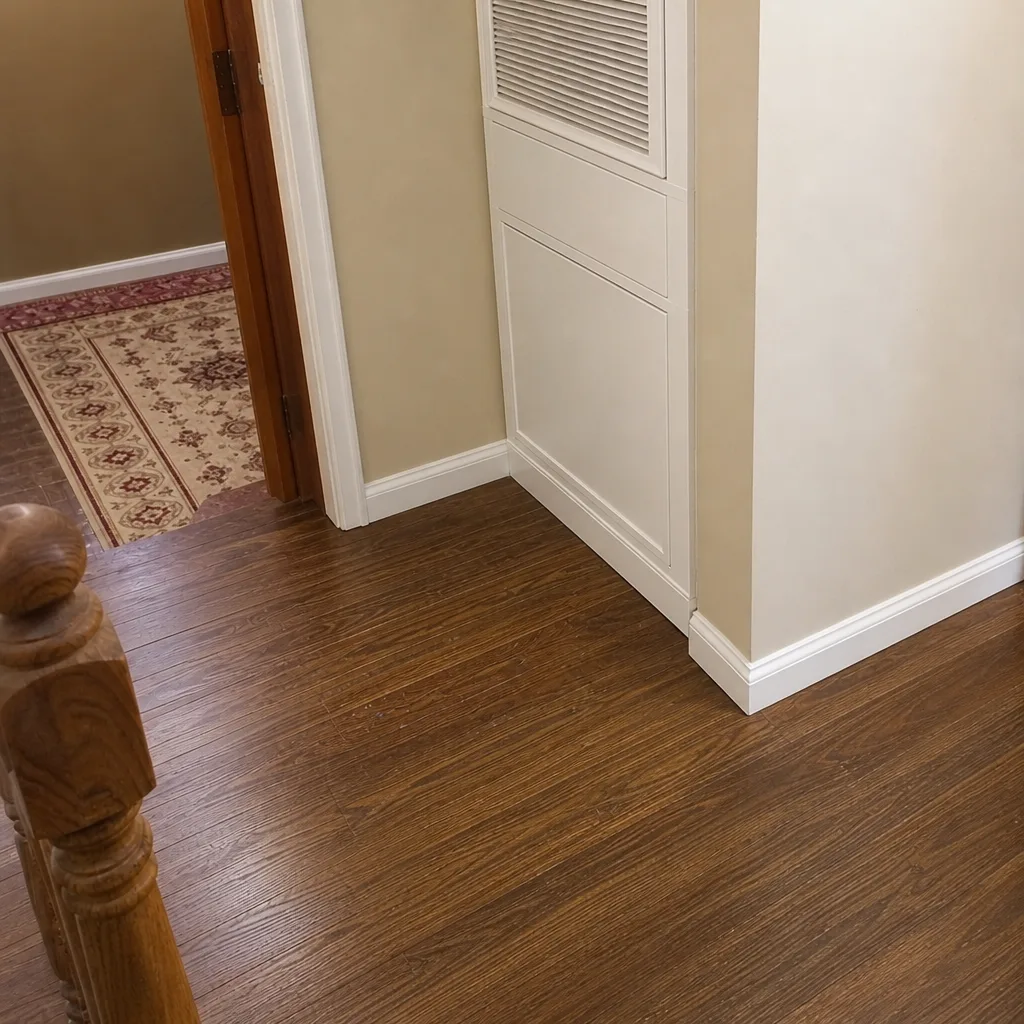 After
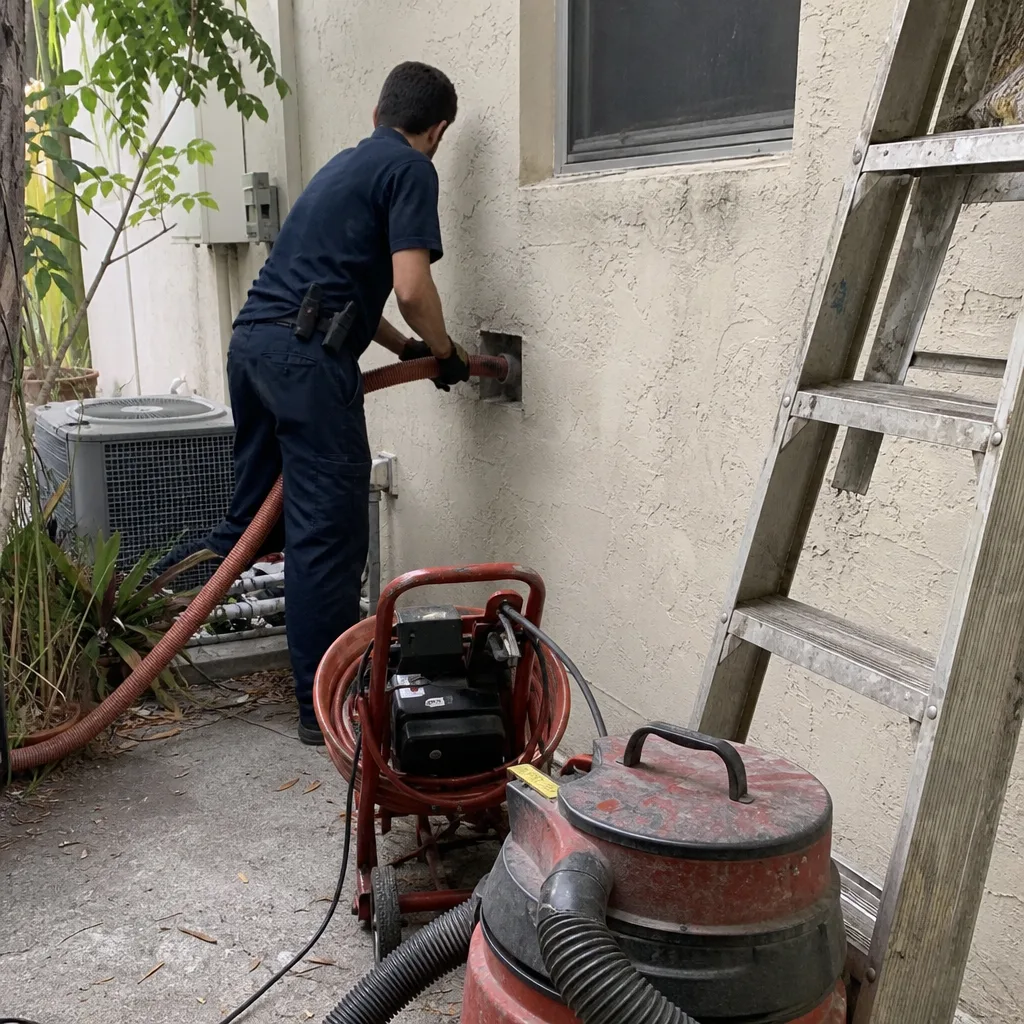 Before
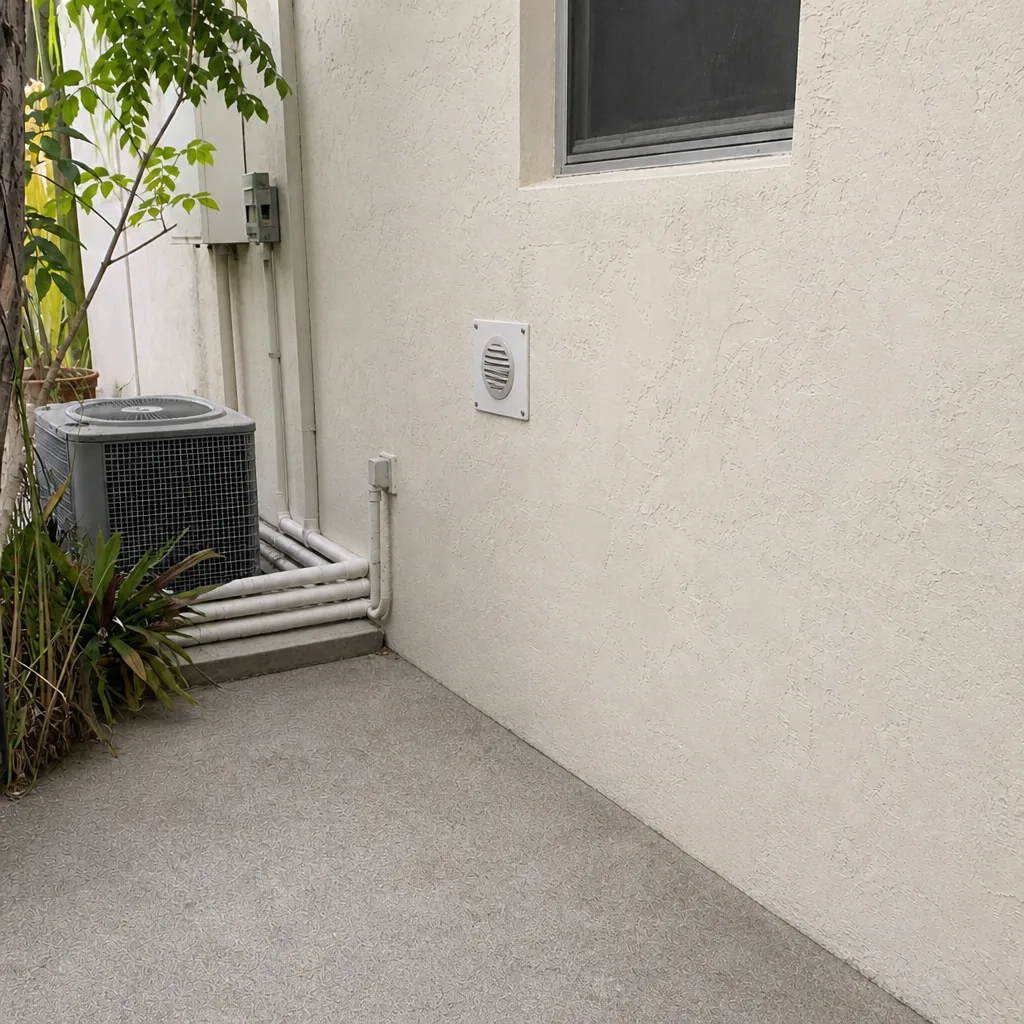 After
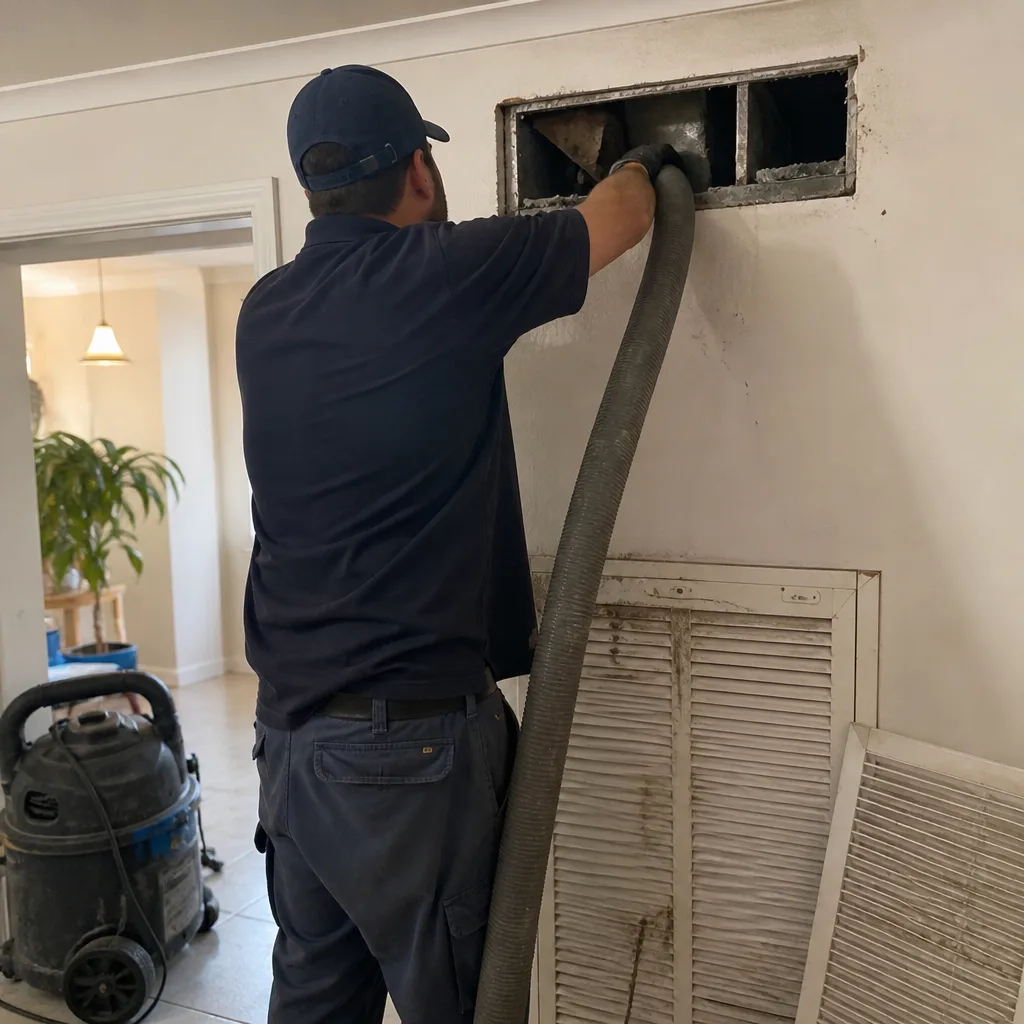 Before
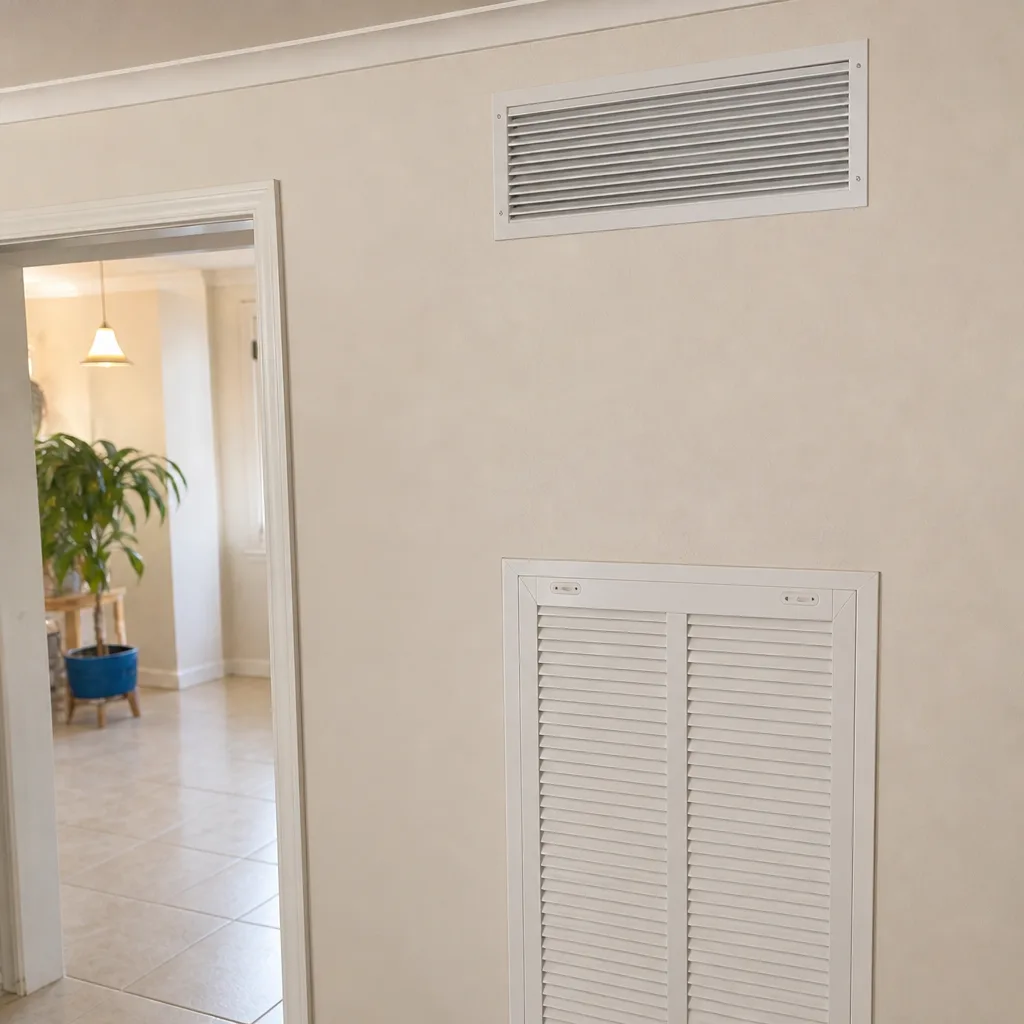 After
When to Call a Professional
Call a duct professional when the air handler closet held water, when a wet filter was found after the storm, when there’s a musty smell anywhere near a supply or return, or when you can’t tell whether the flex duct in the attic is dry. Those are situations a homeowner should not be trying to solve with paper towels and a flashlight. Call a professional before running the system, not after.
If you’ve had storm damage to the roof or soffit, call even if the ducts still look dry. The line between “clean” and “moldy” in a duct system often isn’t visible from the register, and a technician with a camera and the right equipment can settle it quickly.
Valor Air Duct Cleaning offers free estimates in Pompano Beach. Call (844) 795-4871. We answer 24/7. Fast dispatch from 7am to 7pm, Sunday through Friday. Homeowners across Pompano Beach call us after a storm because the equipment we use is what we’d want used in our own homes: Rotobrush rotary brush systems, Nikro negative-air equipment, and Abatement Technologies filtration. That’s the same standard a professional remediation contractor works to, and it’s the standard a post-storm duct inspection deserves.
Frequently Asked Questions
Only after you’ve checked the air handler and accessible duct runs and found no moisture. Visible dryness at a grille doesn’t confirm the duct interior is dry, and flex duct insulation is the most common hidden-moisture spot. If you can’t check the attic or the return chase yourself, call for an inspection before running the system. Call (844) 795-4871 for a free estimate.
The 48 to 72 hour window after water intrusion is the number that matters. Mold can begin colonizing damp duct surfaces inside that timeframe. If you suspect moisture in the system, don’t schedule cleaning for “sometime next month” – call now and let a technician tell you whether it’s a cleaning or something more. Call (844) 795-4871. We answer 24/7. Fast dispatch from 7am to 7pm, Sunday through Friday.
Cleaning removes accumulated debris and contamination from the duct system using rotary brush and negative-air equipment. Remediation is a containment job – the work area is brought under negative pressure, materials may be removed and replaced, and the process is documented for insurance and health reasons. The line between them matters, because the equipment, containment, and documentation requirements are not the same. If your ducts show signs of mold, ask for the scope in writing before anyone starts work. Call (844) 795-4871 to talk through what’s in front of you.
Coverage depends on your policy and whether the moisture came from the storm rather than a pre-existing condition, and only your insurer can say for certain. What you can do is document thoroughly: pre-storm photos, post-storm photos with timestamps, a water-intrusion source photo, and a written contractor report. That package gives your claim the best chance. A free estimate from Valor Air Duct Cleaning includes a professional assessment you can submit with your claim. Call (844) 795-4871.
Yes, check the exterior vent hood. Palm fronds, seed pods, and other blown debris can block the exterior flapper, and a clogged dryer vent is a fire risk, not just an efficiency problem. The dryer vent cleaning we do is the same equipment and discipline as duct cleaning, and a post-storm inspection is the right time to have it done. Call (844) 795-4871 for a free estimate.
The only reliable way is a professional inspection of the interior duct surfaces, which requires a camera and access to runs behind walls and in the attic. A technician can see moisture trapped in flex duct insulation that a homeowner cannot. In a storm-affected home, that inspection is worth doing before the system is run for long. Call (844) 795-4871 for a free estimate.
The Bottom Line
Storm preparation for your ducts is mostly about three things: keeping storm air out of the system, checking before you restart the AC, and calling a professional if you can’t confirm the system is dry. The 48 to 72 hour window after water intrusion is real, and the difference between a cleaning and a remediation job is usually decided in that window. Photograph everything, keep the flex duct even after it’s damaged, and get a written scope before anyone starts work. If you live in Pompano Beach and a storm is heading your way or has just passed, know what your system should look like when it’s healthy, and call if it doesn’t. Call (844) 795-4871 for a free estimate. We answer 24/7. Fast dispatch from 7am to 7pm, Sunday through Friday.
Written by the team at Valor Air Duct Cleaning, serving Pompano Beach since 2018.