
Last updated November 14, 2026
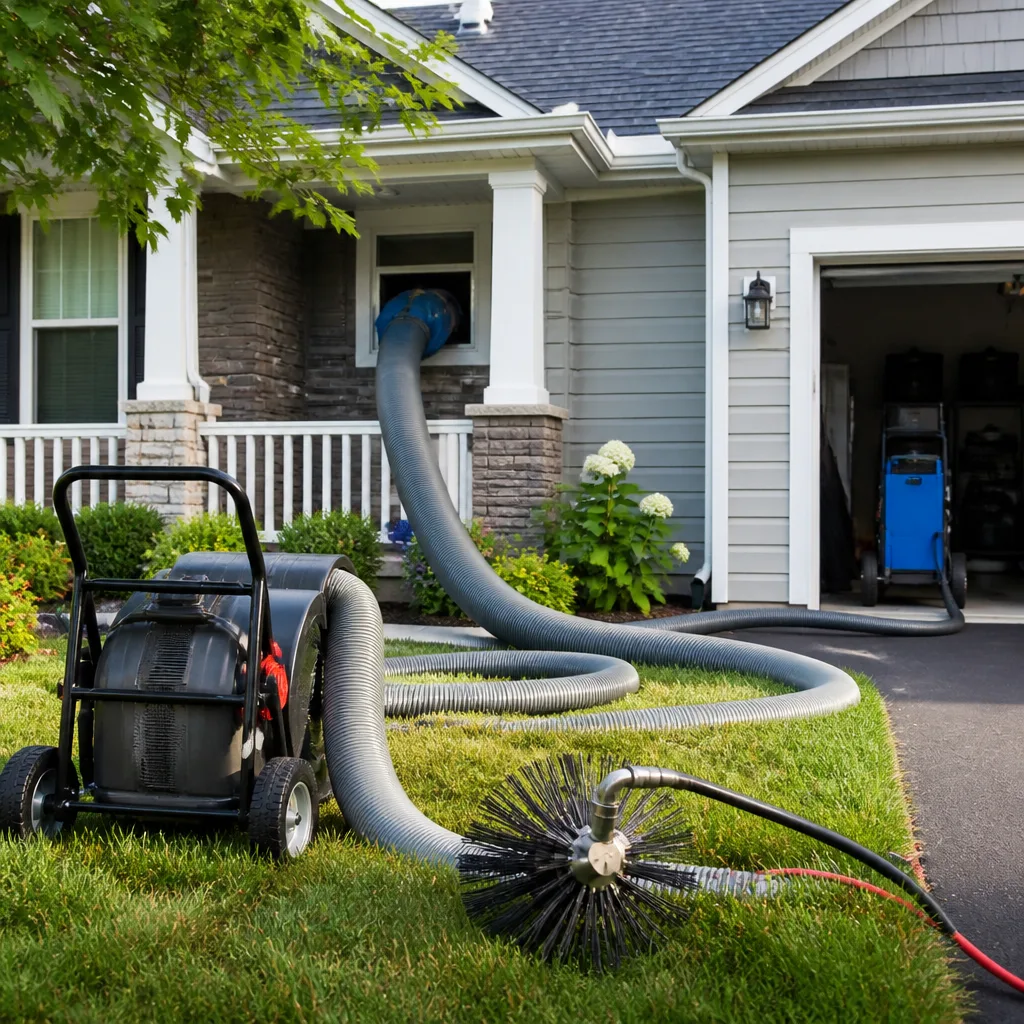 Whole-home duct cleaning
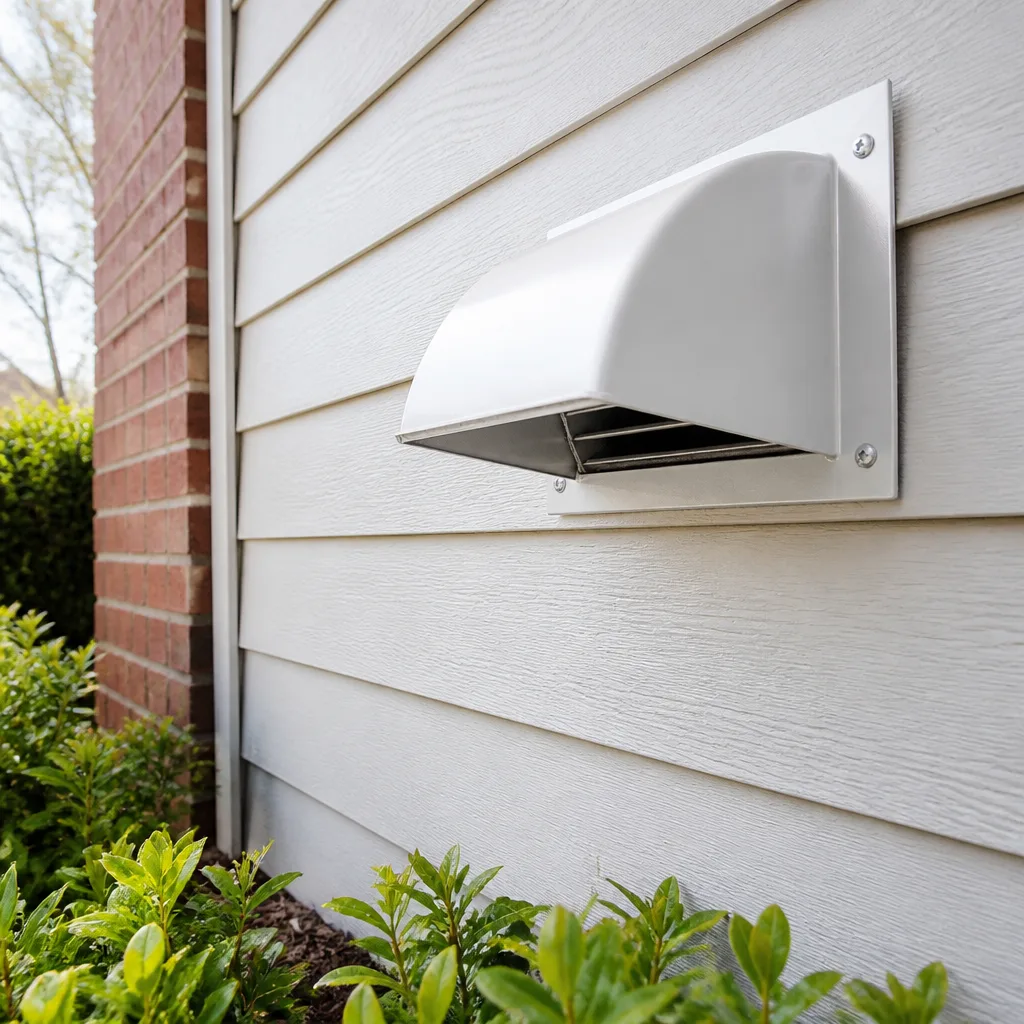 Dryer vent cleaning
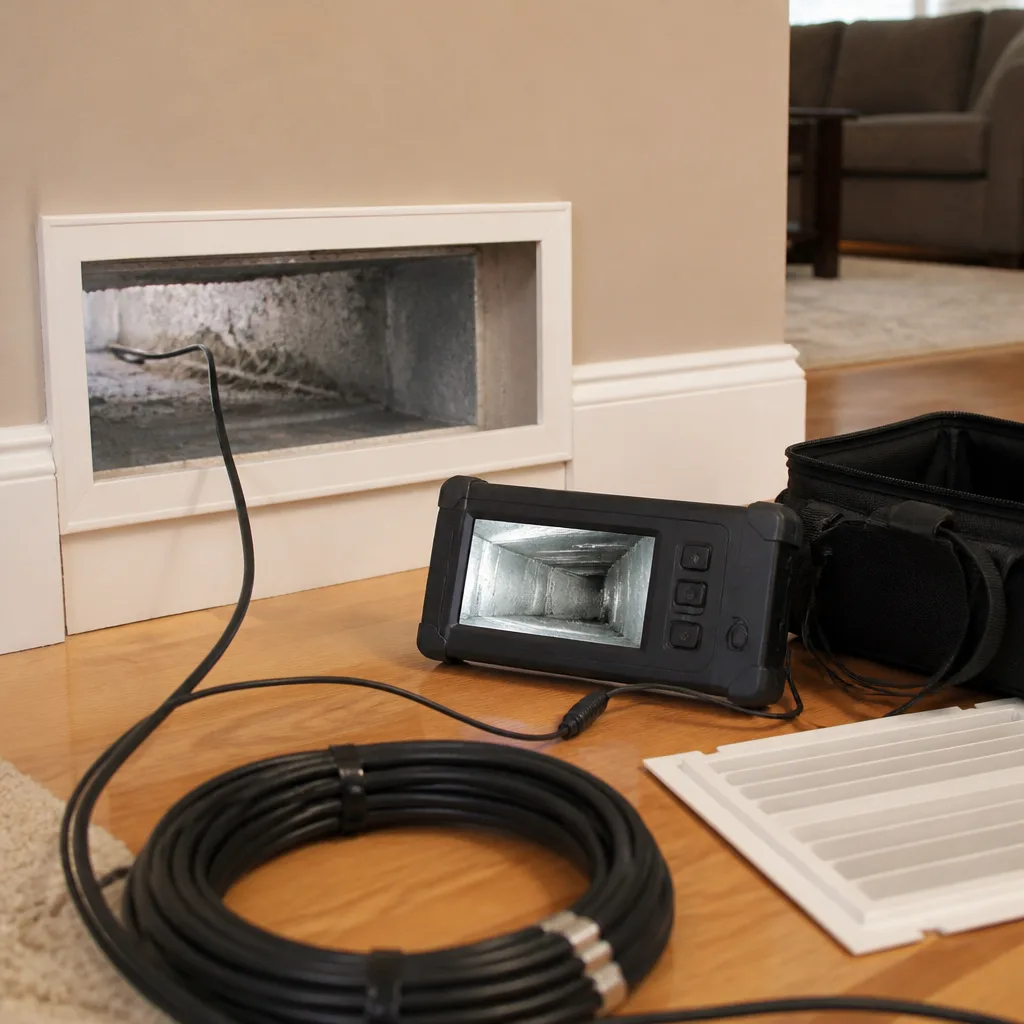 Camera inspection
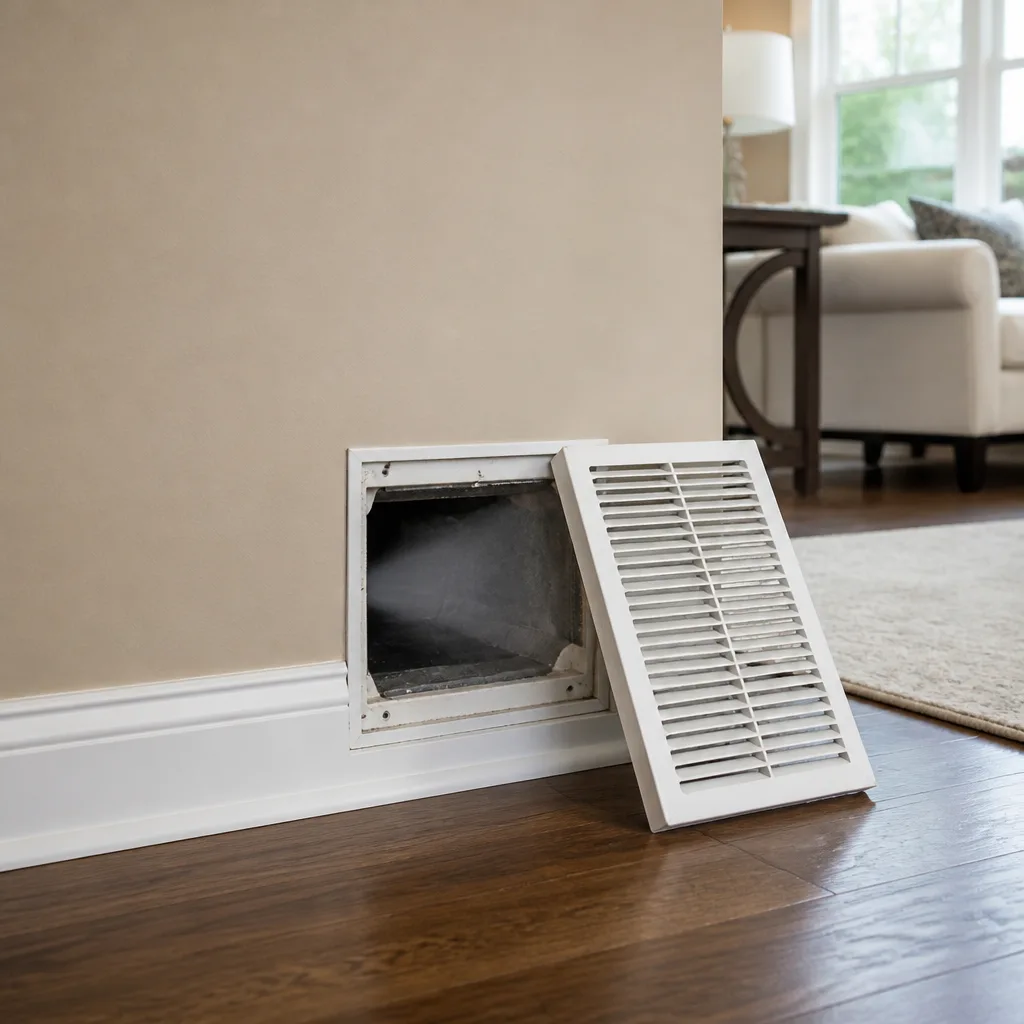 Sanitizing & deodorizing
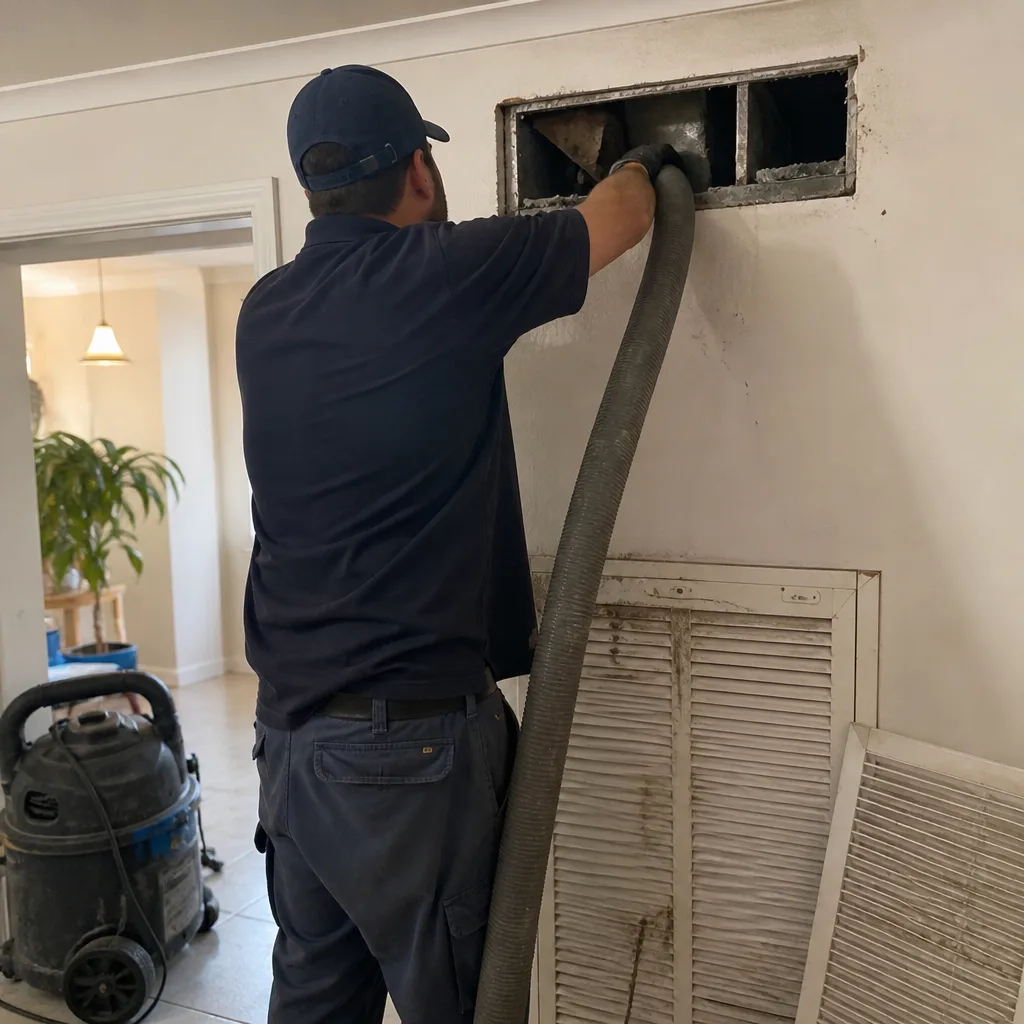
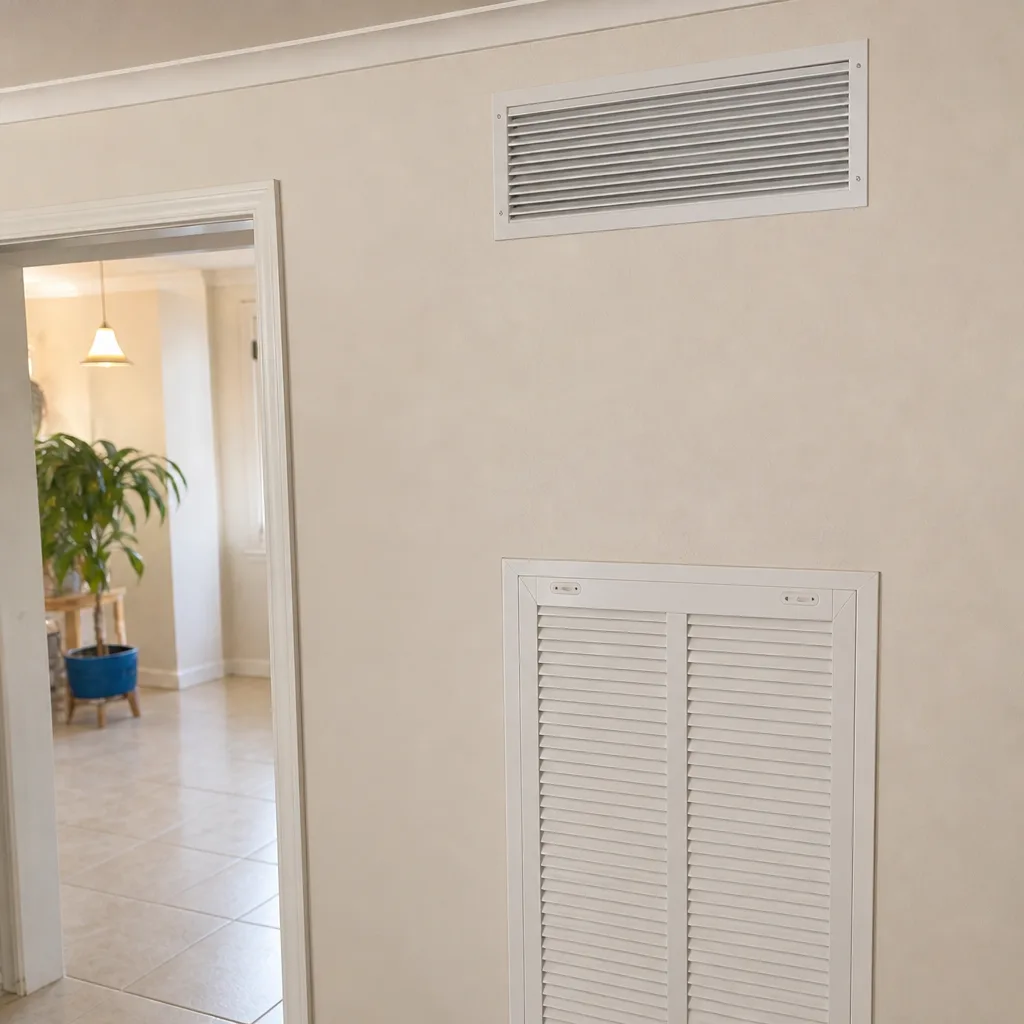
Whole-system duct and dryer vent check with before-and-after photos - you see exactly what came out of your vents
That "$99 whole-house special" is a bait ad - the real number appears once they are in your hallway, or the "clean" is a shop-vac at the register. We photograph the inside of your ducts before and after instead.
Air Duct Cleaning Troubleshooting in Pompano Beach: Common Problems and How to Fix Them
If closing a vent to “redirect” airflow actually made your AC less efficient and your ducts louder, you’ve already met the most common duct troubleshooting mistake. Most homeowners in Pompano Beach reach for duct cleaning because of a symptom: a register that won’t push air, a musty smell in the hallway, a bedroom that never cools. The symptom always shows up at the register. The cause almost never lives there. It sits back in the trunk line, at a crushed flex run in the attic, or right at the air handler where a clogged coil chokes the whole system. This guide teaches you to trace a problem upstream before you spend a dollar on the wrong fix.
Quick Answer
Start at the symptom, then trace it upstream. If one room is weak but others are fine, you likely have a duct design, damper, or crushed-run problem, not dirt. If the whole house smells musty, the cause is often a wet drain pan or coil at the air handler, which cleaning alone won’t fix. Cleaning is the right answer when airflow is generally okay but debris, dust, or microbial buildup has collected inside the ducts, the return, or the dryer vent. The only way to know which problem you have is to measure airflow and inspect the system, not guess from the noise at one vent.
Styles & brands we work with
- Whole-home duct cleaning
- Dryer vent cleaning
- Camera inspection
- Sanitizing & deodorizing
Table of Contents
- How do you map weak airflow with a tissue-paper test?
- Is it a dirty duct problem or a duct design problem?
- What does that mildew smell from your vents actually mean?
- Why is debris blowing out after a cleaning?
- Why do ducts in Pompano Beach get dirty again so fast?
- Why is your dryer vent a separate troubleshooting job?
- How do you spot a damaged duct before it ruins your efficiency?
- How do you choose a duct cleaner who won’t waste your money?
How do you map weak airflow with a tissue-paper test?
Before you call anyone, you can build a simple airflow map of your own house. You don’t need gauges for this. A square of toilet paper, a pen, and a notepad will tell you more about your system than any phone description can. The goal is to find out whether the problem is one register, one zone, or the entire system, because each one points at a completely different cause.
Here’s the test, step by step:
- Turn the thermostat to fan-on so the blower runs without cooling. This gives you steady airflow to measure.
- Hold a single square of tissue paper against each supply register grate, one at a time, and hold it flat. A healthy register pulls the tissue tight and holds it.
- Note on your notepad each register’s reaction: holds strong, flutters, or drops off. Label the room too, not just “bedroom.”
- Repeat at every return grille. A return that can’t hold the tissue is a bigger warning than a weak supply.
- Walk the map. If the weak registers are all at the end of a long run or a branch, you’ve found a distribution problem, not a whole-house dirt problem.
This map matters because it tells a technician where to look before they crawl into the attic. It also protects you. A company that only quotes a cleaning without checking airflow is guessing. In our experience, a homeowner who brings this map to the estimate gets a straighter answer, faster.
Is it a dirty duct problem or a duct design problem?
This is the single most expensive confusion in the trade. A dirty duct and a badly designed duct feel the same at the register, but cleaning fixes one and does nothing for the other. The difference shows up in how the system behaves, not in how it looks.
Look for these signals:
- Even airflow, gradual loss over years. Airflow that has slowly faded everywhere usually points at buildup: dust, debris, and lint coating the inside of the duct and the blower wheel. That’s a cleaning problem.
- One zone always weak, from day one. A room that never cooled well, even when the house was newer, points at design. Undersized runs, long flex runs with sharp bends, or a branch that was never balanced produce the same weak register no matter how clean the duct is.
- Loud, whistling, or banging ducts. Static pressure that’s too high shows up as noise. Dirt adds some restriction, but a duct that whistles or a register that roars when you close a bedroom door is telling you the system’s airflow is squeezed. That’s a design and pressure problem.
- Air comes out but never arrives. If a supply pushes air and the adjacent return pulls it straight back, you have a balance problem. Cleaning won’t fix it. A technician needs to look at damper position and branch layout.
The practical point: measure before you buy. If your tissue map shows one weak room and the rest of the house is strong, put the cleaning money toward an inspection of that branch first. If the map shows a slow, even decline across every register over the years, a full air duct cleaning is addressing the right thing.
What does that mildew smell from your vents actually mean?
A musty odor from the supply vents is the most misread symptom in Pompano Beach, and it pays to slow down here. In our humidity, the smell could be a microbial buildup inside a damp duct, but it just as often comes from a wet drain pan or a dirty evaporator coil sitting downstream of the filter. Cleaning the ducts when the real cause is a saturated drain pan will clear the smell for a week and then it returns, because the moisture source never went away.
Run this check first, in order:
- When does the smell appear? Only when the AC starts up after sitting off for hours, or all the time the fan runs? Startup-only smell tends to point at standing moisture near the coil or pan. Constant smell points more at the duct interior or a return that’s drawing from a damp space.
- Look at the drain pan under the air handler, if you can safely see it. Look for standing water, slime, or rust. Any of those means moisture is where it shouldn’t be. This is the coil-and-drain-pan side of the problem, not the duct side.
- Check the filter and the coil face. A filter that’s been in too long, or a coil caked with dust, holds moisture and grows odor. That’s an HVAC service item.
- Look for water staining in the return plenum or at the filter slot. Staining near the air handler means moisture is entering the airstream there.
What the smell rules out matters just as much. A strong musty smell with a wet pan and a dirty coil usually rules out the ducts as the primary source. A faint smell that’s worst in the farthest rooms, with a clean pan and coil, points back to the ducts. If you’re not certain, an inspection settles it before you spend. A proper Pompano Beach duct service should be able to tell you which side of the system the smell is coming from, and why.
Why is debris blowing out after a cleaning?
Debris puffing out of registers right after a cleaning is not normal and it’s not “the last of the dust working its way loose.” It’s a red flag about how the previous company did the job. A proper cleaning uses negative-air containment: the ducts are put under pressure control and a powerful vacuum pulls debris toward a filter, so the dirt is captured, not pushed into the rooms. When debris comes back out of the vents, it usually means the previous crew blew compressed air through the system without real extraction, or used a shop vacuum that couldn’t hold the load. That’s the “blow-and-go” pattern, and the evidence shows up on your walls and furniture.
What a contained job looks like instead:
- The crew protects floors and furniture and sets up equipment before touching a register.
- Rotobrush rotary brush systems agitate and scrub the duct walls while a high-powered vacuum captures what’s loosened. That’s professional-grade equipment, not a shop vac with a logo on it.
- Nikro negative-air equipment keeps the system in a controlled vacuum so loosened debris travels to a collection point, not into the room.
If you had a cleaning and now you’re finding grit on your furniture or a fine dust film on the ceiling near the return, document it with photos and get a second look. That’s not a duct problem you live with. It’s a job that wasn’t done completely, and it can be re-done properly. Debris recurring after a cheap clean is one of the most common reasons homeowners in Pompano Beach call us for a second estimate.
Why do ducts in Pompano Beach get dirty again so fast?
Some of the conditions here quietly feed duct contamination, and most generic guides never mention them. Three local realities matter:
- Slab-on-grade construction. Many homes sit on a slab, so the air handler and much of the ductwork run through hot garages and attics. Those spaces reach extreme temperatures and carry a lot of dust and humidity. A duct that leaks in that environment draws in hot, dusty air and condenses moisture on cool surfaces. That’s a recurring contamination pattern a northern-climate guide won’t prepare you for.
- High year-round humidity. Our air is wet most of the year, and a home with poor return balance can hold moisture inside the system. Moisture plus dust equals the microbial buildup that shows up as smell. That’s why the drain pan and coil check matters here more than in a dry climate.
- Older flex duct installs. Flex duct is common in this housing stock, and it doesn’t age well. It sags, kinks, and occasionally tears in an attic. A kinked flex run drops airflow and collects lint at the folds, so it re-contaminates even after a clean. When we inspect, we look for that sagging and kinking before recommending cleaning, because cleaning a compromised run just resets the clock.
What this means practically: the cleaning interval here is often shorter than the general advice. If the ducts sit in a dusty attic, feed a busy return, and sit in constant humidity, they refill faster than the standard “every few years” advice. After a proper cleaning, most Pompano Beach homes do well checking airflow and the filter on a set schedule. The system tells you when it’s due again if you know which signals to watch.
Why is your dryer vent a separate troubleshooting job?
Your dryer vent works on a completely different principle than your supply and return ducts, and it deserves its own troubleshooting pass. A dryer taking longer and longer to dry clothes is a signal. Lint and heat building up in the vent is the underlying cause, and it’s a real fire risk. A dryer vent is not comfort maintenance; it’s safety. Clearing it properly matters.
Troubleshoot it like this:
- Run a normal load and time it. A load that used to dry in one cycle and now takes two or three means the vent is restricted somewhere downstream.
- Check the exterior vent door while the dryer runs. A strong, steady flap means airflow is moving. A weak flap, or a door that won’t open at all, points at a clog.
- Disconnect at the dryer and look at the first few feet. Lint packed there is the most common restriction, and it’s the part a homeowner can verify.
- Don’t run long, flexible, corrugated vent lines if you can avoid them. They catch lint at every ridge and are the worst offender for buildup.
Dryer vent cleaning is one of our three core services, and it’s where the measurable outcome is simple: a clear vent lowers fire risk and gets the dryer back to a normal cycle. If your dryer is taking too long, treat it as a cue, not a nuisance. That’s the point of dryer vent cleaning.
How do you spot a damaged duct before it ruins your efficiency?
Dirty ducts and damaged ducts aren’t the same problem, and cleaning won’t fix damage. A duct that’s torn, disconnected at a joint, or crushed in the attic leaks conditioned air into hot, dusty space, and it pulls contamination in. That’s a repair job, not a cleaning job, and it’s why we offer air duct repair as its own service. Cleaning a damaged duct just leaves a leak that re-dirties it.
What to look for:
- A high electric bill with normal usage. A leaking duct lets conditioned air escape, so the system runs longer. That’s cost you feel, not dust you see.
- Visible sagging or kinked flex duct in an attic. If a run sags, kinks, or looks like it was crushed by stored boxes, airflow drops.
- Hot spots or cold spots near a leak. A disconnected joint near the attic can make the room below warmer even when the AC is running fine.
- Dust lines near a register or joint. A small tear near a joint will pull attic dust into the airstream. You often see a faint dust shadow at the fitting.
If you’re seeing these, we inspect the integrity of the runs before recommending cleaning. Repairing the structural cause is what keeps the system efficient and keeps the contamination from coming back. That’s a different service, and it’s the one that actually addresses the cause.
How do you choose a duct cleaner who won’t waste your money?
This is the troubleshooting question that saves the most money, because a bad cleaning turns a duct problem into a worse one. The market has a range of providers, and the cheap ones often bring a shop vacuum and a coupon and leave the debris in the ducts. Here’s how to tell the difference before you book.
The questions to ask, and what the answers tell you:
- “What equipment do you bring?” Rotobrush rotary brush systems and Nikro negative-air equipment are the standard for real removal. Abatement Technologies filtration shows a crew working to containment-level discipline, the same standard used in remediation work. If they can’t name their equipment, that’s a signal.
- “How do you handle the air handler and the components?” A crew familiar with Honeywell and Aprilaire air quality components understands the whole airstream, not just the duct runs. Look for that breadth.
- “Is the price a per-vent rate or a whole-system price?” Per-vent pricing is how a small quote becomes a big invoice. We work on one flat price per system, agreed before work starts, so you know the number going in.
- “Will you show me before-and-after photos of my own ducts?” Photos of your ducts, not stock photos, are the proof the job was done.
- “Do you check for damage?” A company that only cleans and never checks integrity is cleaning around problems. We repair ducts, not just clean them, because dirty ducts and damaged ducts aren’t the same problem.
Settle these questions before you book, and the bait-and-switch market stops being a risk. You can read more about our approach on the Valor Air Duct Cleaning main page, and a free estimate settles the rest.
Common Mistakes to Avoid
- Closing vents to “balance” airflow. Closing a register raises static pressure in the system and can make every other register weaker and louder. If one room is hot, fix the run, don’t shut a vent.
- Assuming a musty smell means dirty ducts. In our humidity, a wet drain pan or dirty coil is often the cause. Cleaning ducts first can waste the money and leave the smell in place.
- Hiring a “blow-and-go” cleaner to save a few dollars. A shop-vac-based job can push debris into the rooms and leave it in the system. You end up paying twice.
- Ignoring the dryer vent because the dryer still works. A slow dryer means a restricted vent, and lint in the vent is a fire risk. Treat it as a real safety issue.
- Not checking the attic flex runs for kinks and tears. A crushed run re-dirties the whole system after a cleaning. Look at the runs before you book.
- Cleaning a damaged duct instead of repairing it. A torn or disconnected run will keep leaking and pulling in dust. Fix the leak first.
- Chasing symptoms room by room. A tissue map across the whole house tells you more than one noisy register. Measure the whole system before deciding what’s wrong.
See the difference
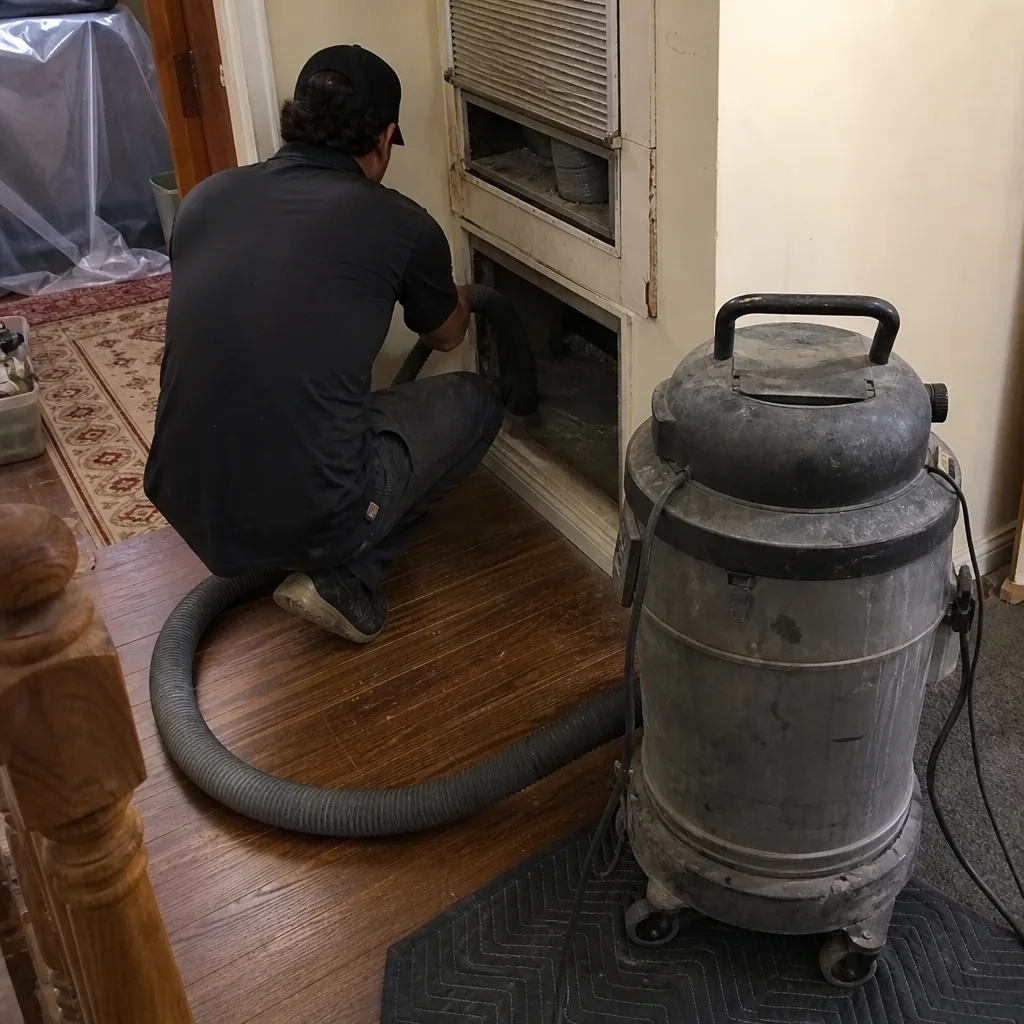 Before
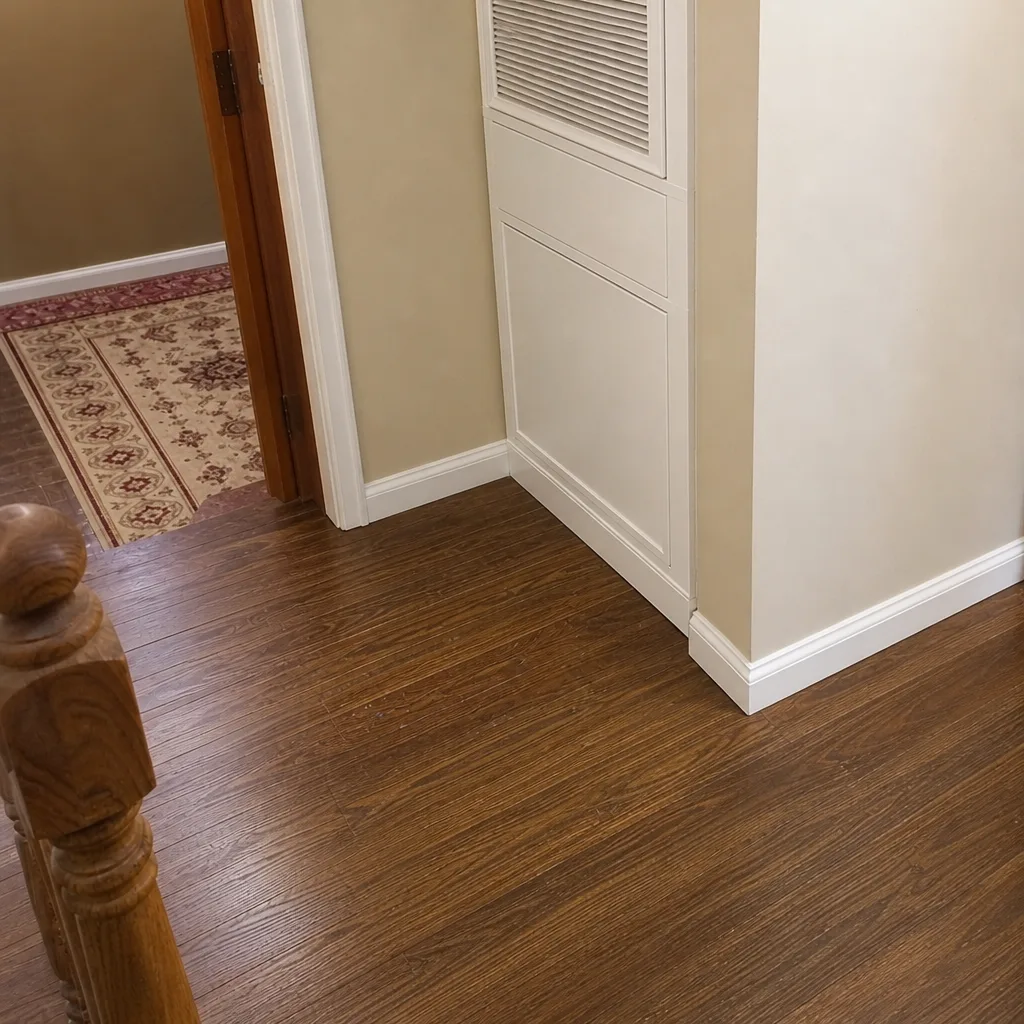 After
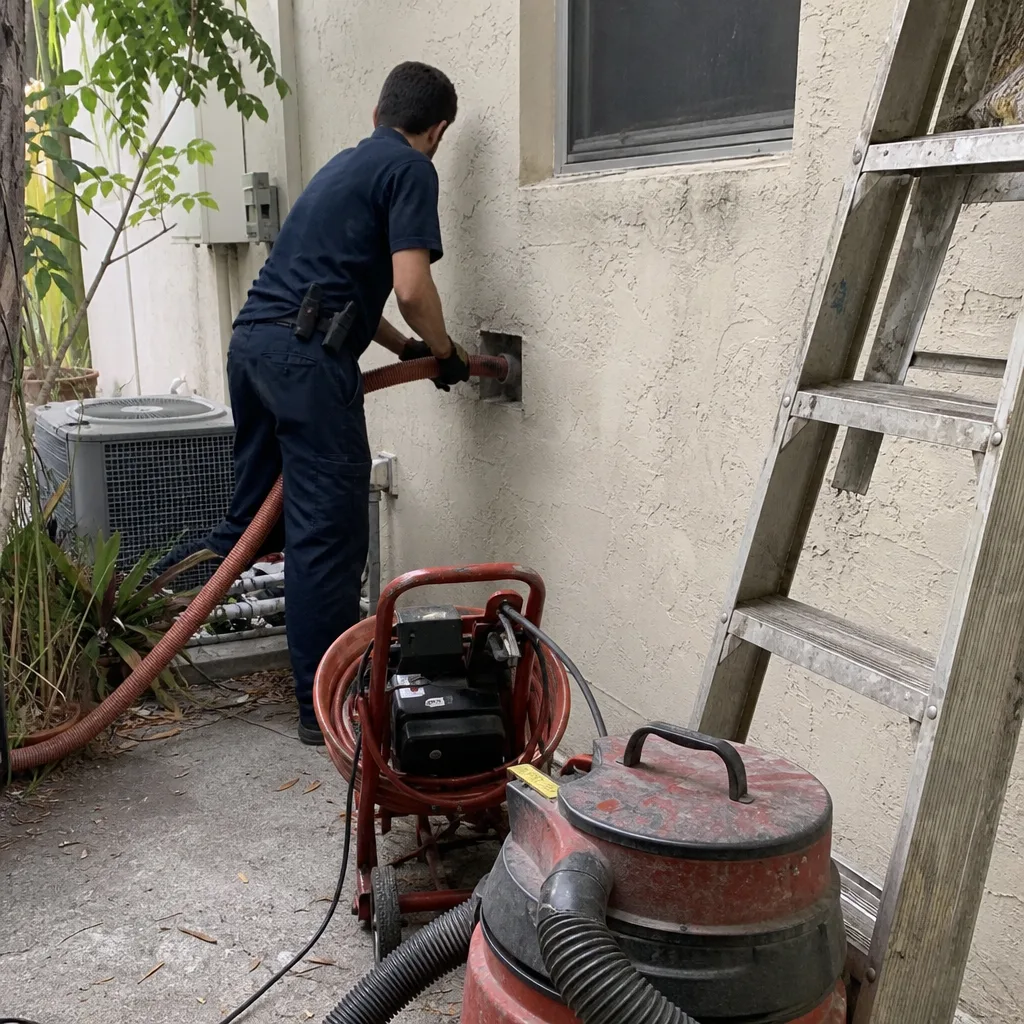 Before
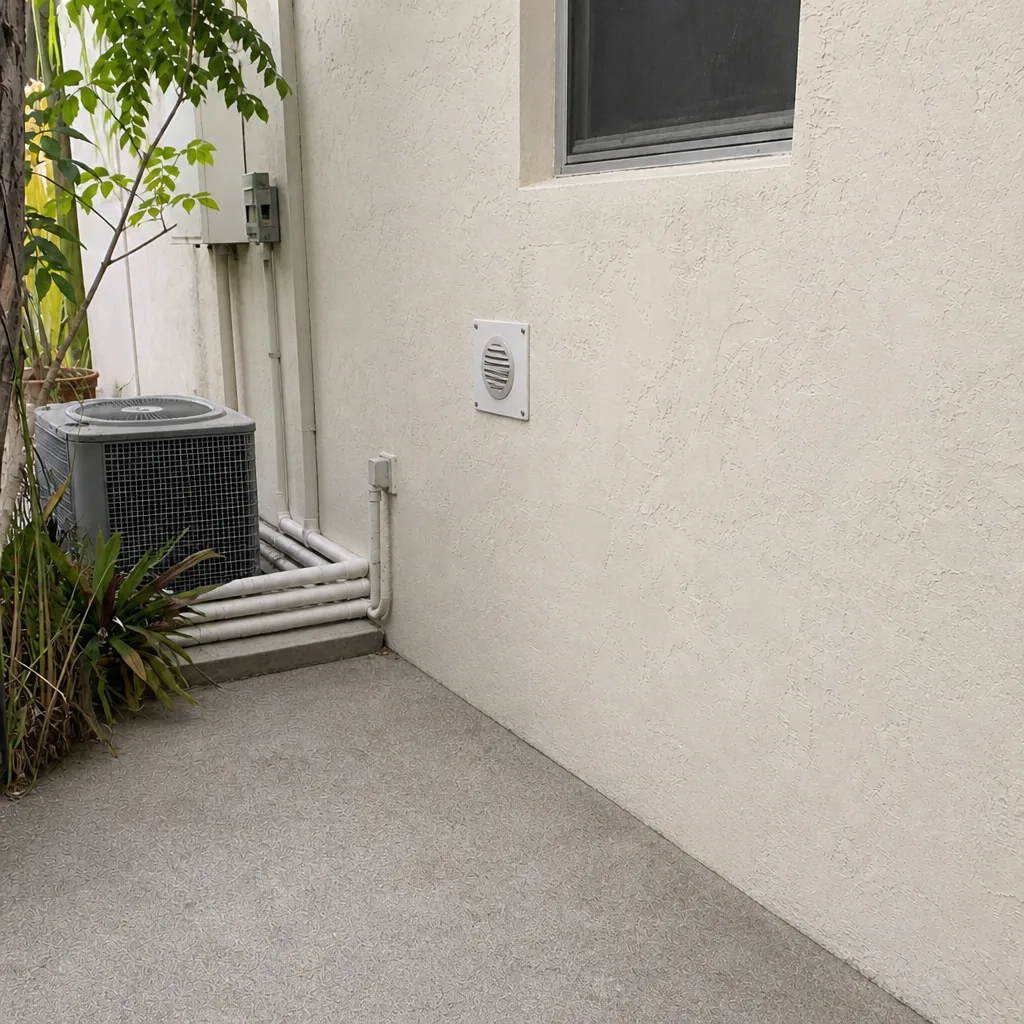 After
 Before
 After
When to Call a Professional
Some troubleshooting you can do. A tissue map and a filter check are fair game, and knowing when the smell started is useful. But some problems need a trained eye: a musty smell that keeps coming back after you’ve checked the drain pan, a whole-house airflow loss that improves nothing when you clean the filter, visible water near the air handler, a dryer that won’t finish a load, or a duct you can see is torn or crushed in the attic. Those are the cases where guessing gets expensive. Call when the tissue map shows a pattern you can’t explain, or when you’ve already had a cheap cleaning and the problem remains. Valor Air Duct Cleaning offers free estimates in Pompano Beach, and we’ll tell you whether the issue is cleaning, repair, or the HVAC side. Call (844) 795-4871. We answer 24/7. Fast dispatch from 7am to 7pm, Sunday through Friday.
Frequently Asked Questions
Air duct cleaning in Pompano Beach is priced per system, not per vent, and the exact number comes from a written estimate after we see the system. We don’t quote a teaser price and then add items on the drive. The written estimate sets the final price, and the estimate is free. Call (844) 795-4871 for an exact quote, and we’ll give you a number that doesn’t move.
Cleaning addresses buildup inside an intact system. Repair addresses a tear, disconnect, or crushed run that’s leaking air and pulling in dust. The tissue map helps: if airflow fades evenly across the whole house, it’s likely buildup. If it’s weak in one zone or the bill jumped, suspect damage or design. We inspect before we recommend, because cleaning a damaged duct just re-dirties it. Call (844) 795-4871 and we’ll help you sort it out.
Because the quote is often for a smaller job than you think. A low per-vent rate can leave you paying more as each vent is added, and the equipment behind it is often a shop vacuum that can’t hold the debris. Real removal needs containment and a real vacuum. We work on one price per system, agreed before we start. Call (844) 795-4871 for a free estimate that reflects the whole job.
Ask for before-and-after photos of your own ducts, not stock images. Containment is the other proof: a job done right doesn’t leave debris blowing out of the vents afterward. You should see the equipment in place and photos of the runs before and after. If a contractor can’t show pictures of your ducts, don’t accept “it’s done.” Call (844) 795-4871 and we’ll show you ours.
It depends more on the home than the calendar. Here, hot attics, high humidity, and older flex installs feed contamination faster than in a dry climate, so the interval is often shorter than the generic advice. Watch airflow and the filter, and check the vents for that dust film. When you see it returning, it’s time. Call (844) 795-4871 and we’ll help you judge the interval for your house.
Often yes, but it depends on the source. If the smell survives a drain pan and coil check and comes back after cleaning, the cause may be a moisture source in the duct or the air handler that needs a closer look. We trace it before we quote. Call (844) 795-4871 and we’ll help you find where the smell is actually coming from.
The Bottom Line
Most duct problems in Pompano Beach are misdiagnosed at the register. Weak airflow, a musty smell, or a noisy vent is a cue, not an answer. Trace it upstream: run the tissue-paper map, separate a dirty-dust problem from a design-and-pressure problem, check the drain pan and coil before blaming the ducts, and treat the dryer vent as a safety item. When the map points at buildup in an intact system, a contained cleaning with professional-grade equipment is the right move. When it points at a torn or crushed run, repair comes first. Do the troubleshooting, then call for a free estimate and get a straight answer.
Ready to stop guessing? Call (844) 795-4871 for a free estimate. We answer 24/7. Fast dispatch from 7am to 7pm, Sunday through Friday. We’ll tell you whether it’s cleaning, repair, or the HVAC side, and give you one flat price per system before work starts, with before-and-after photos of your own ducts.
Written by the team at Valor Air Duct Cleaning, serving Pompano Beach since 2018.